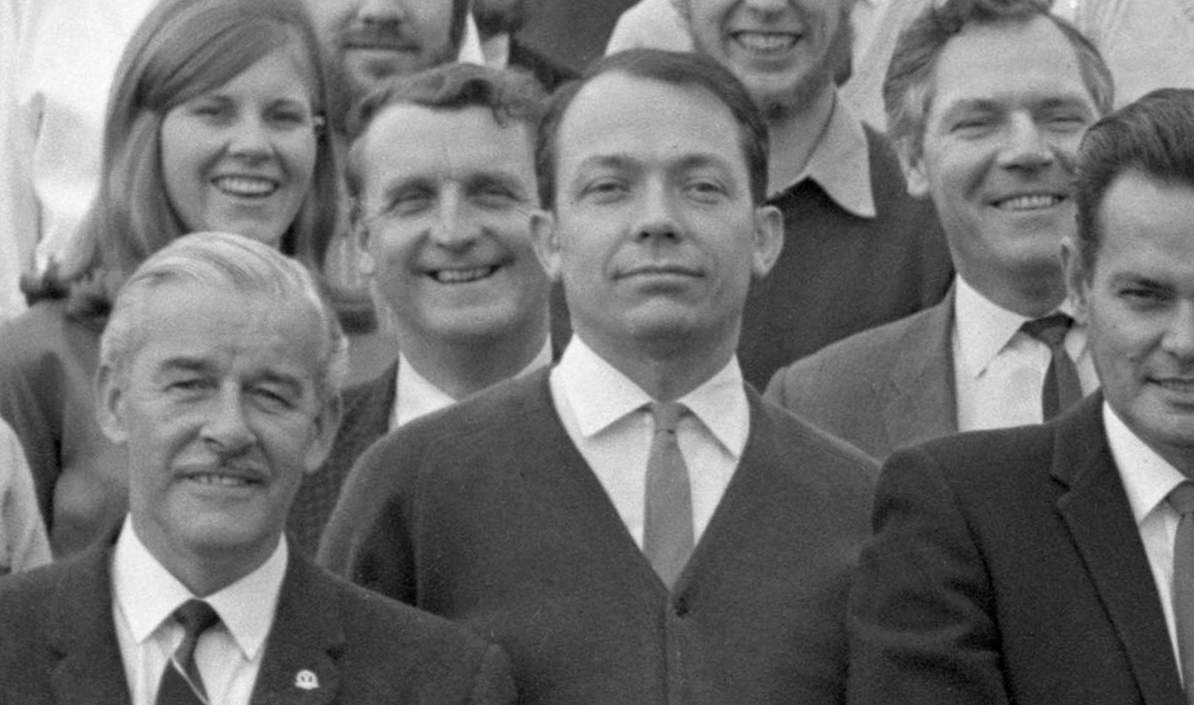
Michael Evenett
Honeysuckle Creek.
|
Mike Evenett is seen in this post-Apollo 11 Honeysuckle team photo. |
Michael Evenett was born in Winchmore Hill in north London, just prior to the Second World war. At a young age his house was damaged by a V1 bomb. He attended the local primary school and then Minchenden Grammar school.
At 18 he joined Thorn Electric on a so-called “sandwich course” apprenticeship where he worked six months at the factory and studied the other six months for four years, leading to a degree in Electrical engineering.
Canada
In 1963 he left England to work in Canada at Goose Bay in Labrador on The Mid-Canada Line. Goose Bay was the site of a large US Air Force Base under the nominal command of the Canadian Air Force. He worked in the communication section. The work was well paid but not intellectually stimulating.
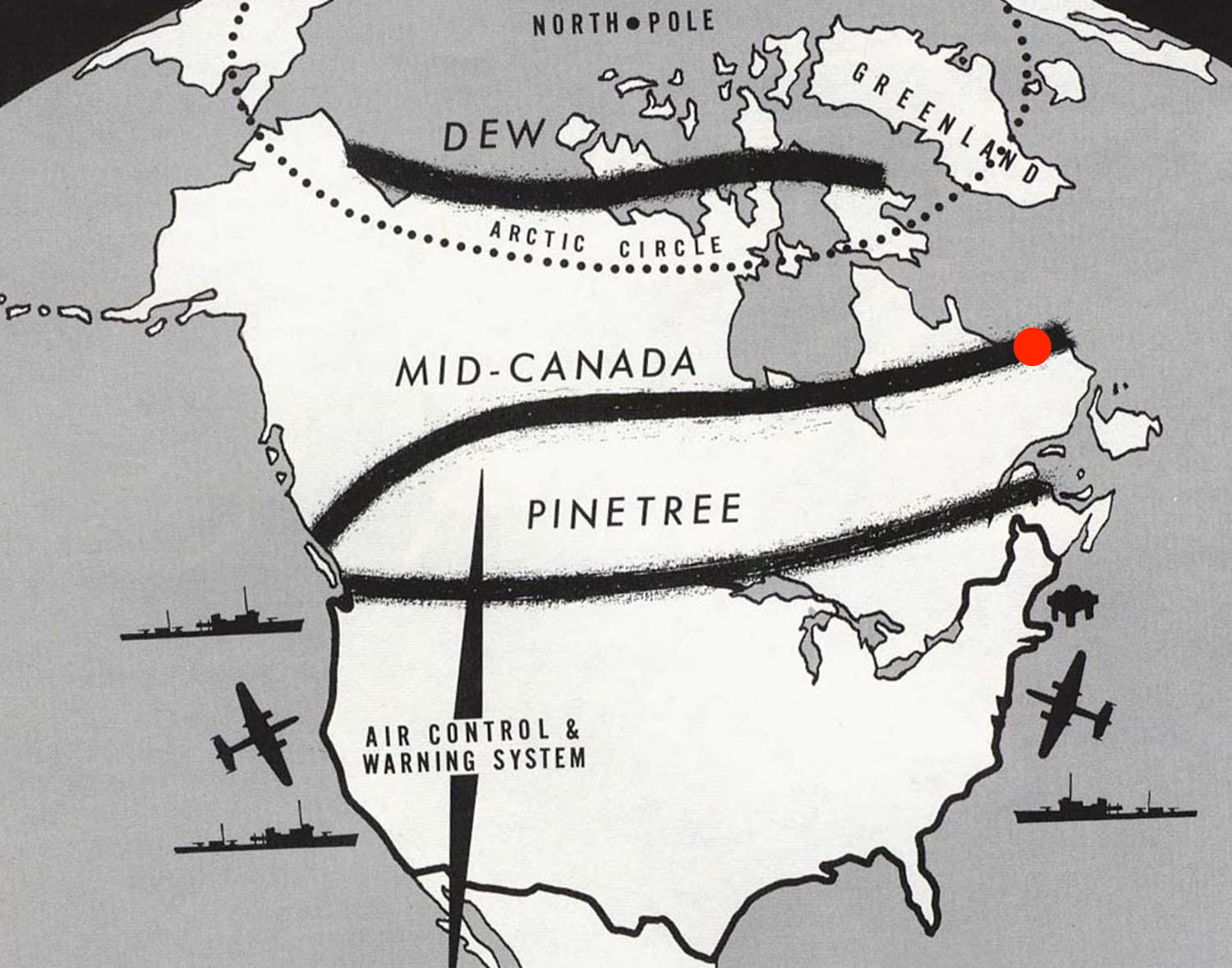 |
Goose Bay, on the Mid-Canada Line, is marked with the red spot. |
Mike was then recruited by Federal Electric to help upgrade the communications on the Dew Line which was a line of radar and communication sites in the far north of Canada built to guard against surprise attacks across the Artic. The work including upgrading the transmitters which were very similar to the ones later used at Honeysuckle Creek.
Australia
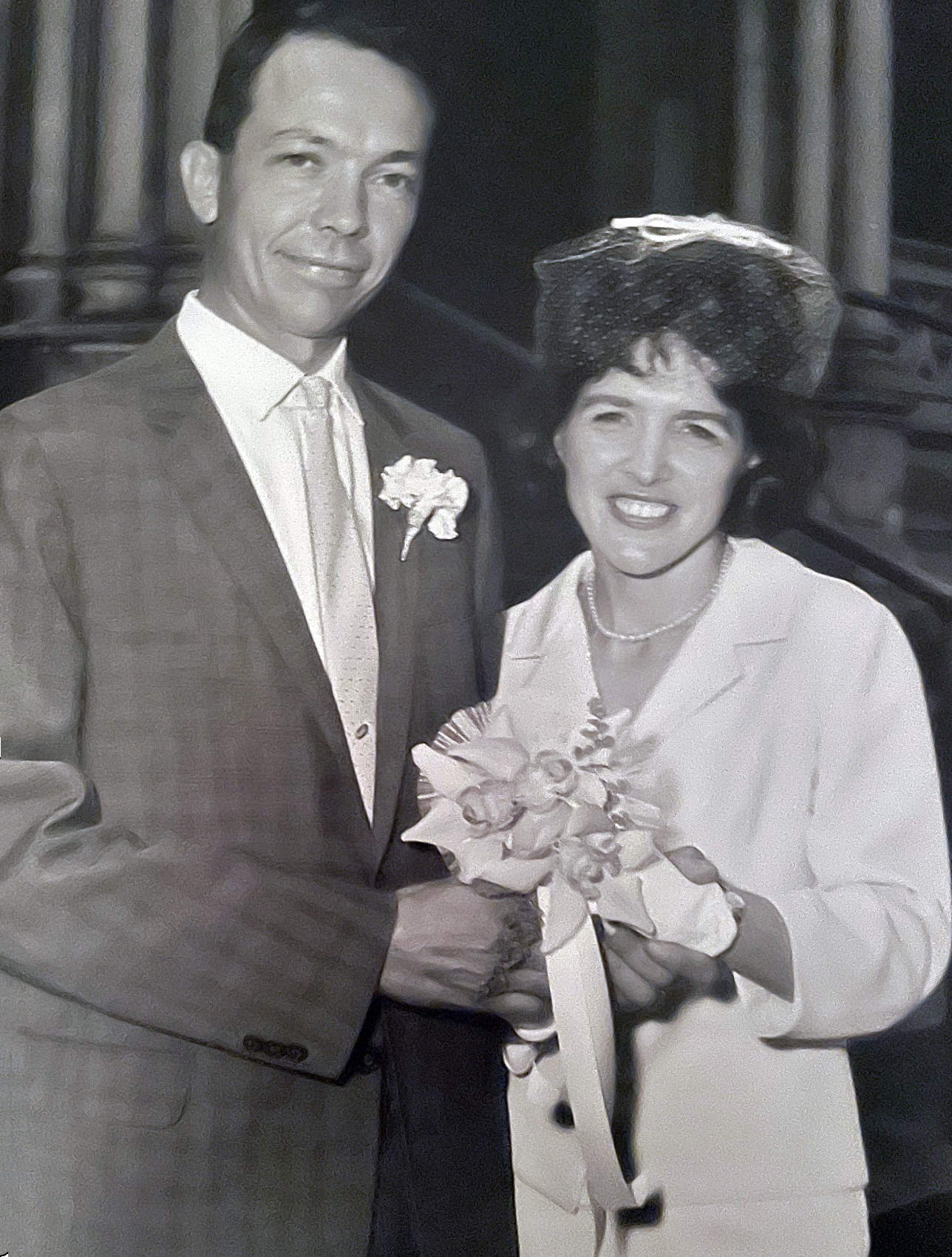
In 1965, after a tourist sight-seeing holiday in Canada and the US, he sailed on the P & O Oronsay to Honolulu and Japan and then on to Sydney. He met his future wife Phyllis on the Oronsay.
 |
On arrival in Sydney, Mike was recruited by Standard Telephones and Cables to help install microwave communication between Brisbane and Cairns.
Honeysuckle Creek
STC obtained the contract to run Honeysuckle Creek and he was selected to be the RF engineer. He was sent to Dallas where Collins Radio ran ten week courses on the equipment. Bernard Smith, Roy Benson, Brian Bell, Hamish Lindsay, Bruce Cameron, Paul Mullen and John Mitchell also attended these courses.
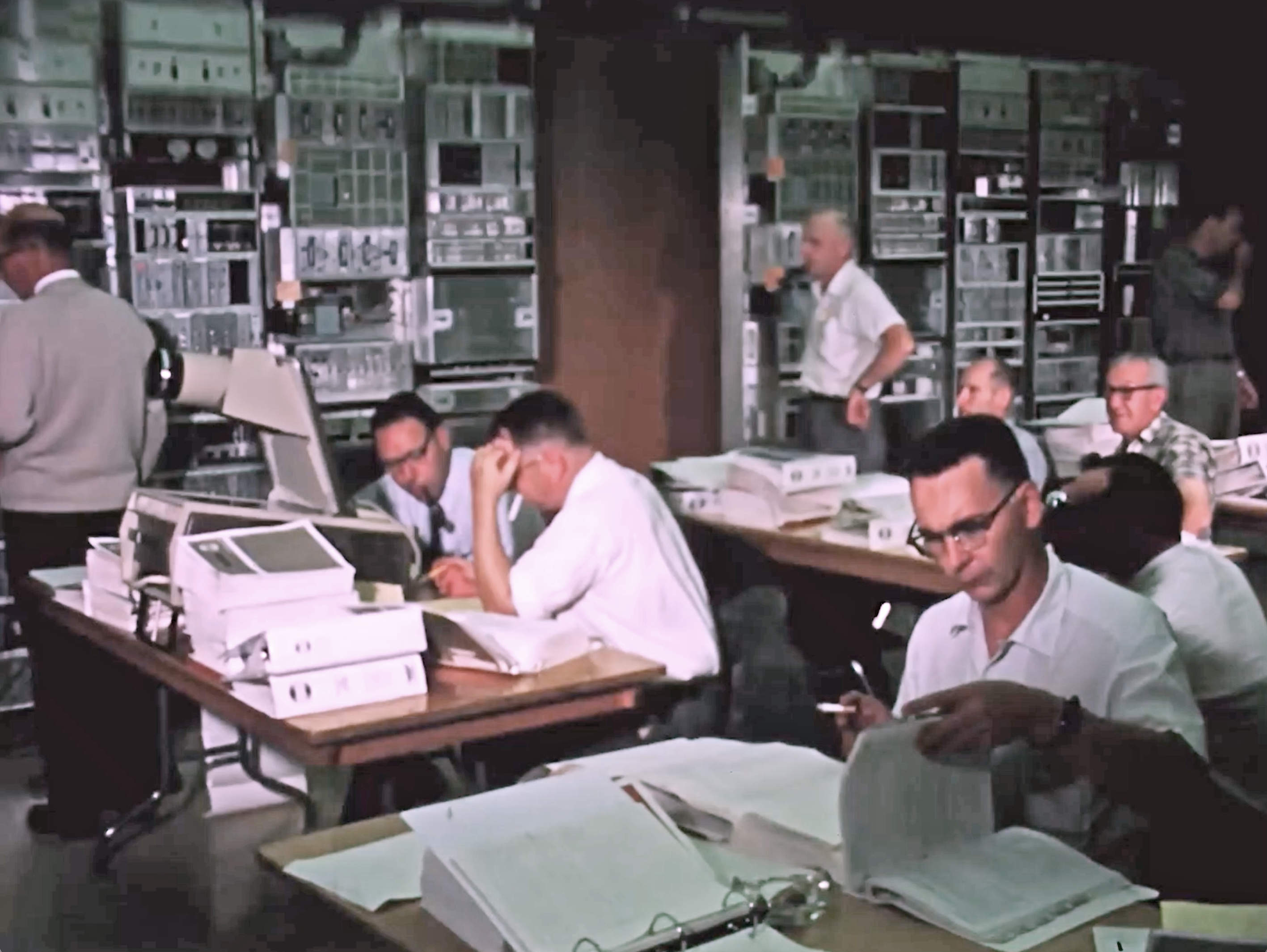 |
A Collins Radio training course on the Unified S-Band system in Dallas, circa 1965. Frame from a Collins Radio promotional film, with thanks to Don Stulken of the Arthur A Collins Legacy Association. |
When Tom Reid became Station Director he stayed on as RF engineer but was later promoted to USB engineer.
 |
In February 1971, just after the completion of Apollo 14, a section of the road into Honeysuckle slid into the valley after heavy rain. The next days, in this photo by Hamish Lindsay, USB Engineer Mike Evenett (left) and Chief Engineer Bill Kempees inspect the damage. Updated scan by Colin Mackellar 2021. This photo was featured in the the Manned Space Flight Network’s Technical Information Bulletin Volume 8, Number 8, for June 17 1971. |
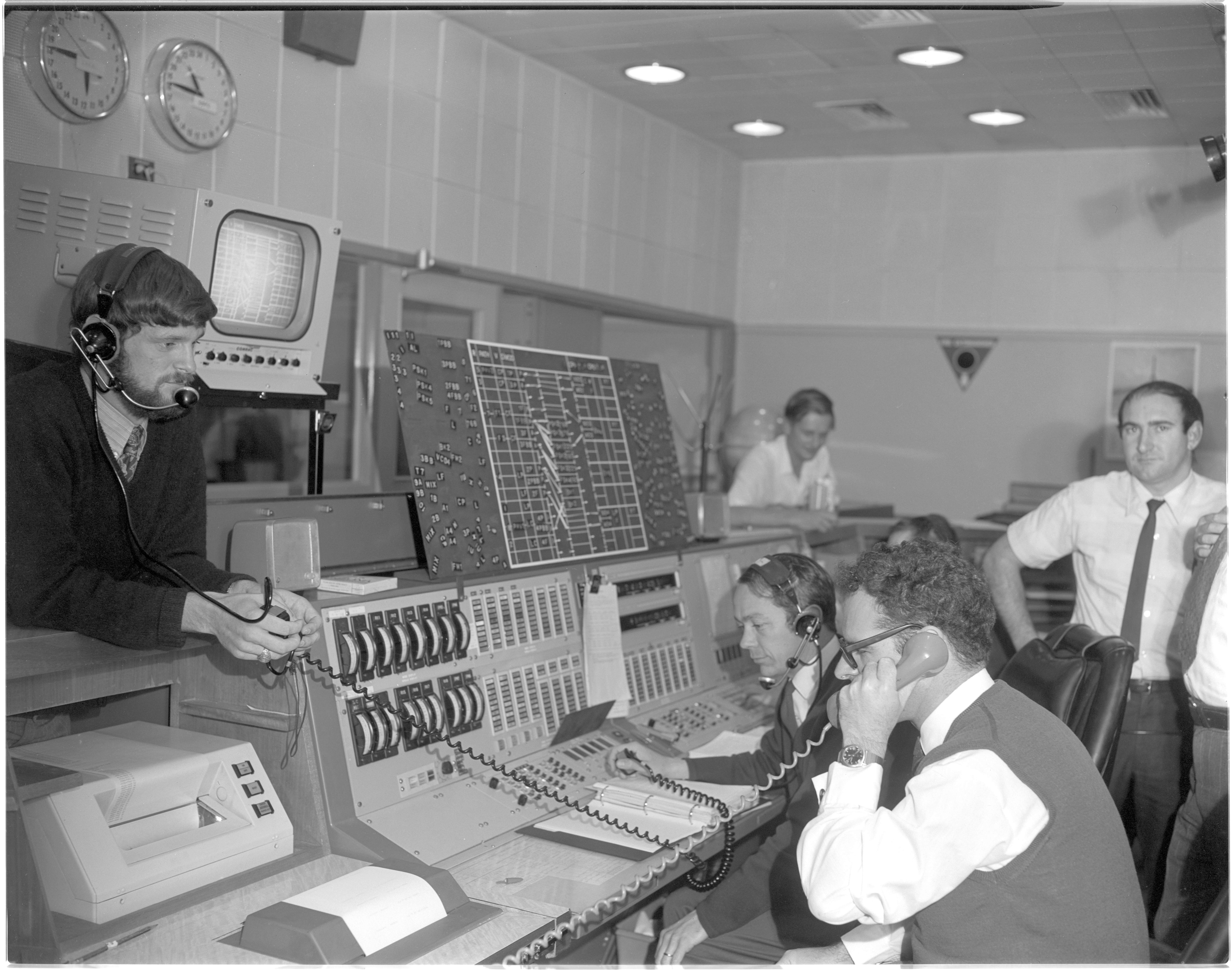 |
On 15 June 1971, Goddard Space Flight Center’s Super Constellation NASA 421 overflies the station while Sim personnel run the Honeysuckle team through their paces. At left, Simulation Conductor Evan Gull watches Mike Evenett (centre, on the console) and Ian Grant (foreground) as they prepare to support Apollo 15. Image: HSK 5/9/7/3 - 63. Photo by Hamish Lindsay. |
 |
A cropped version of the photo appeared in Goddard News. With thanks to Larry Haug for the scan. |
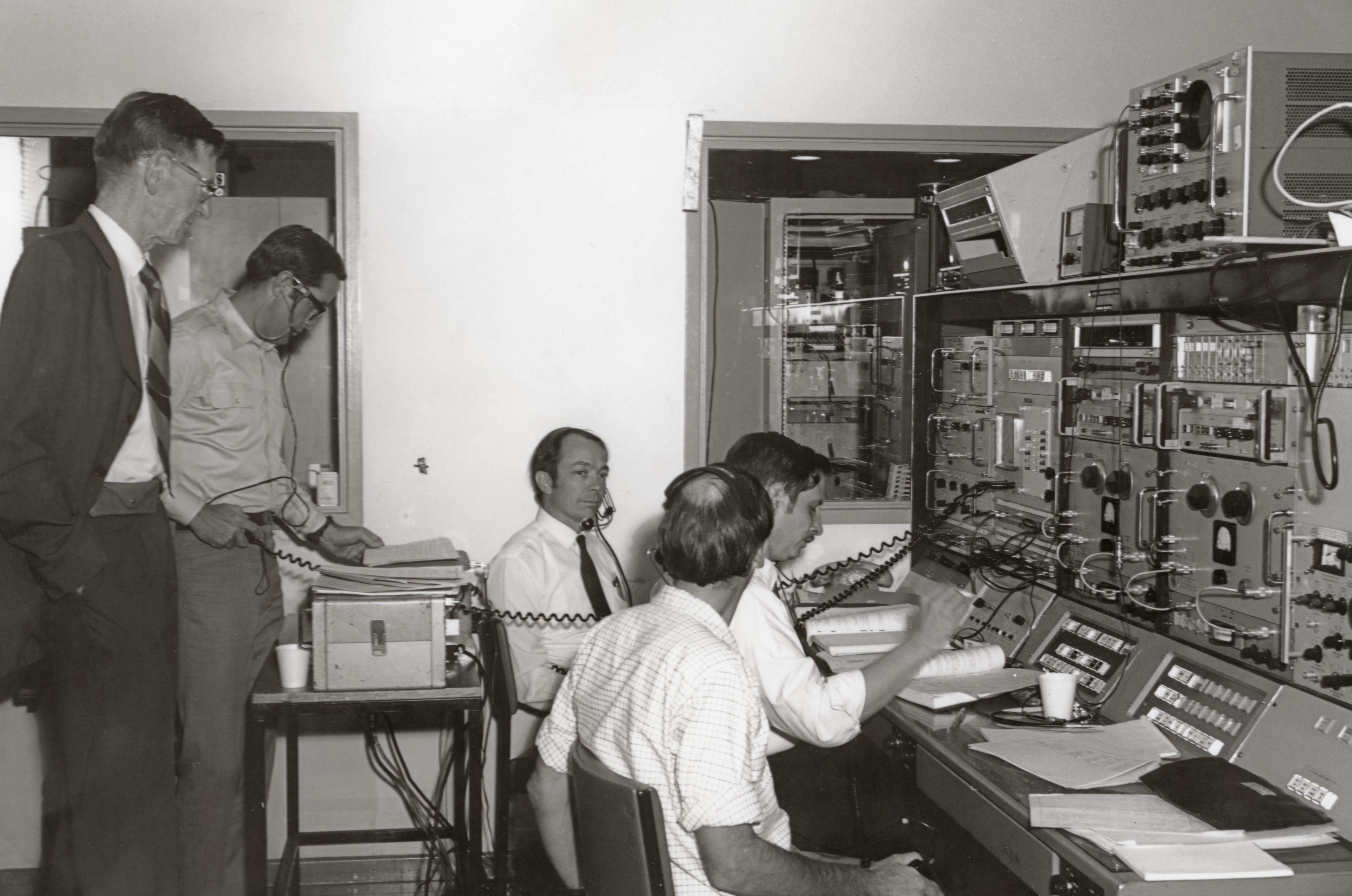 |
On 03 March 1972, NASA 421 returned to Honeysuckle Creek in preparation for Apollo 16. Goddard Sim Conductor Kermit Blaney is second from left, and Mike Evenett is seated at centre at the Honeysuckle Simulation Console. Photo: Hamish Lindsay. |
Later career
In 1974 after the completion of the Apollo program he joined the Department of Transport, and subsequently Airservices, where he worked on Noise Monitoring systems which were installed at most major airports in Australia.
Mike retired in 1999 and now lives happily in Maroochydore on the Sunshine Coast in Queensland with his wife Phyllis.
__________
– With thanks to Mike for all his help.