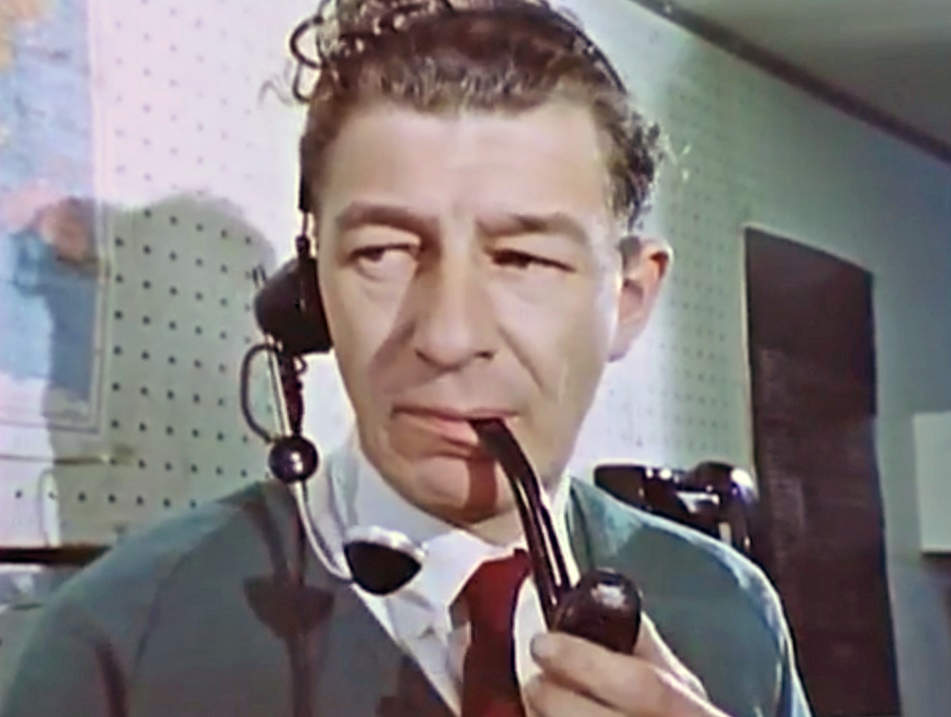
Don Blackman in the VERLORT Radar trailer at Muchea from the 1962 NASA documentary Friendship 7. Seen at 11:36 and 25:46 in the film.
Available on YouTube and Archive.org.
Don Blackman
1921 – 2015
Muchea, Carnarvon, Cooby Creek.
|
Don Blackman in the VERLORT Radar trailer at Muchea from the 1962 NASA documentary Friendship 7. Seen at 11:36 and 25:46 in the film. |
Donald Bedford (Don) Blackman was born in Eastbourne, Sussex, in 1921. After school, he studied at Eastbourne Technical College to become an electrician.
In 1940, he joined the Royal Air Force and became a radar operator until 1945.
The War years over, in 1948 Don took up a position as lighting technician at the De La Warr Pavilion in Bexhill-on-Sea, on the Sussex coast. Opened 15 years earlier, the De La Warr Pavilion is regarded as the first major building in the Modernist style to be constructed in England. It housed a restaurant, reading room and lounge, as well as an entertainment hall capable of seating at least 1,500 people.
Australia
In 1957 Don and his wife Peggy, and their children Robert and Pauline, emigrated to Australia. While they settled initially in Perth, Don’s first employment was at Kalgoorlie Power Station in 1957, and then as an electrician at the Wooroloo Tuberculosis Sanitorium, 50km ENE of Perth, from 1958 to 1960.
In 1960, followed a stint at the de Haviland factory in Elizabeth, South Australia but, at the end of 1960, Don returned to Perth. There he took up a position with the Australian Department of Supply’s Weapons Research Establishment as Radar technician at the brand new Muchea Tracking Station.
Muchea
At Muchea, Don worked alongside Ken Lee on the VERLORT Radar for all except the last of the Mercury “Man in Space” missions, including John Glenn’s history-making three-orbit in February 1962. He left Muchea at the end of 1962.
The VERLORT Radar was a descendent of the radars Don used in England during the War.
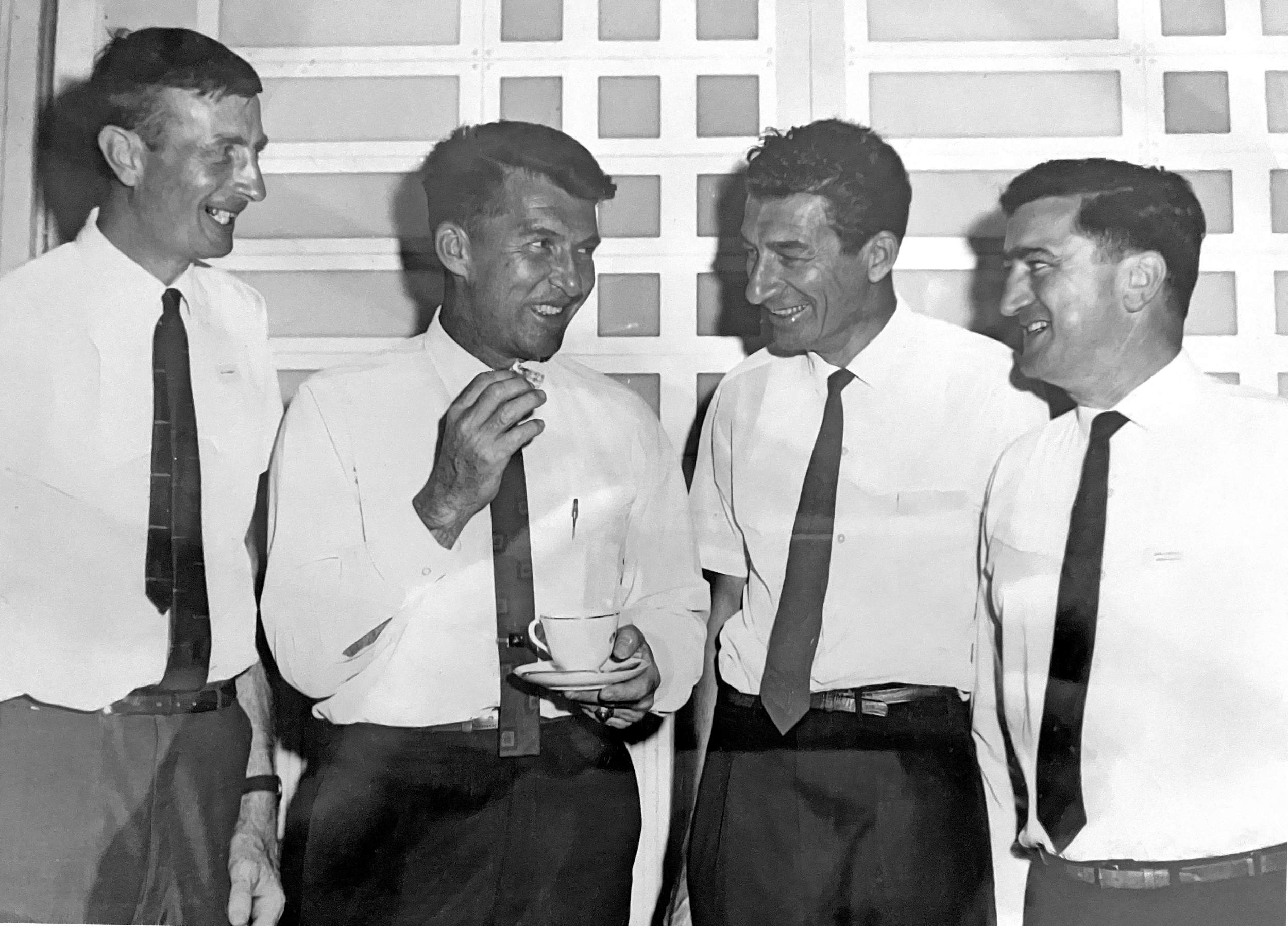 |
Taken in late 1961, this photos shows (L-R) Lewis Wainwright, Muchea Station Director, The photo was apparently taken at a Perth Hotel around November 1961, when Schirra was at Muchea for the flight of MA-5, when Chimpanzee Enos was the “Pilot”. Photo with thanks to Robert Blackman. |
 |
The VERLORT radar tower and trailer is at right in this panorama of Muchea. The T&C building is in the distance at left. (The VERLORT system, minus the concrete tower, was later transferred to Carnarvon.) Image assembled by Colin Mackellar from 16mm film shot at Muchea probably in late 1961. |
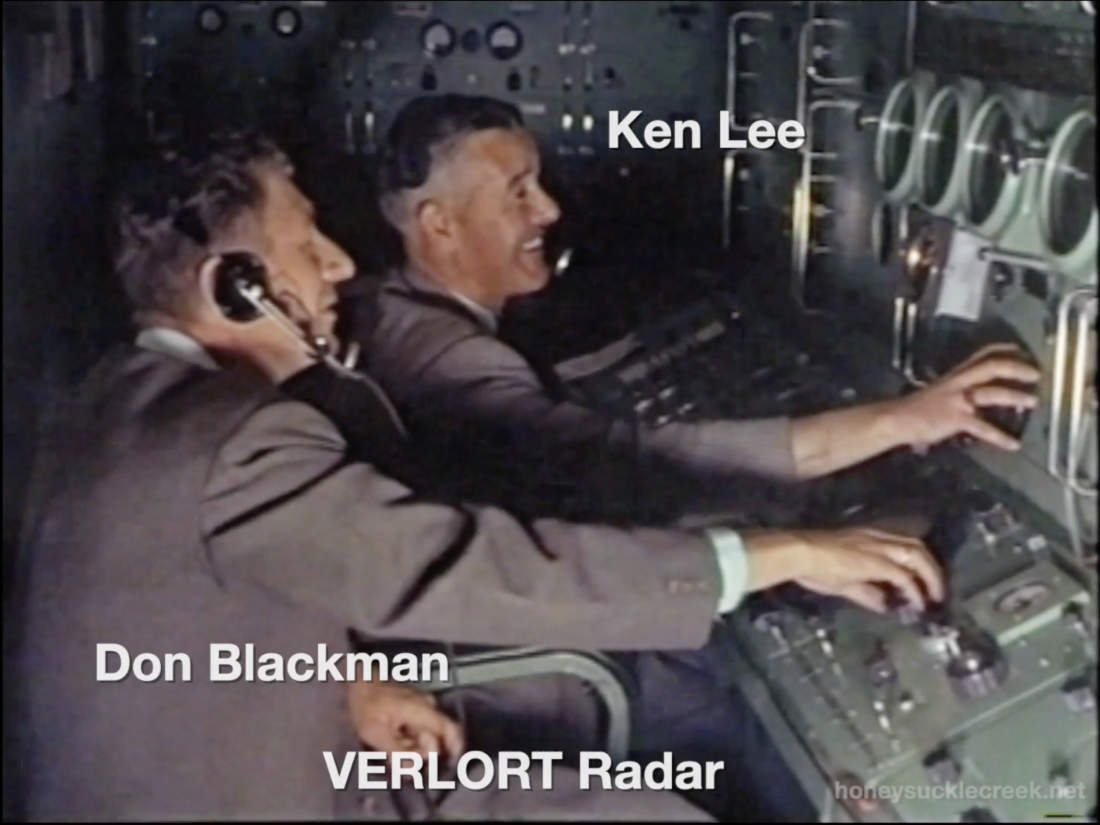 |
Don Blackman and Ken Lee at the Muchea VERLORT controls, probably late 1961. See the brief footage at 4'40" in this compilation of Muchea footage. |
In early 1963, Don and family then returned to England where he worked at the Hinkley Point Nuclear Power Station in Somerset, which was then under construction. (It opened in 1965.)
Carnarvon
Their time back in England was short-lived as, late that year, Don obtained employment at Carnarvon Tracking Station, then under construction. So the family moved back to Western Australia.
Don served as Radar Technician on the RCA-built FPQ-6 Radar, with special responsibility for the Antenna, from 1964, through the early Gemini missions, up until the Gemini 7 and 6a flights in December 1965.
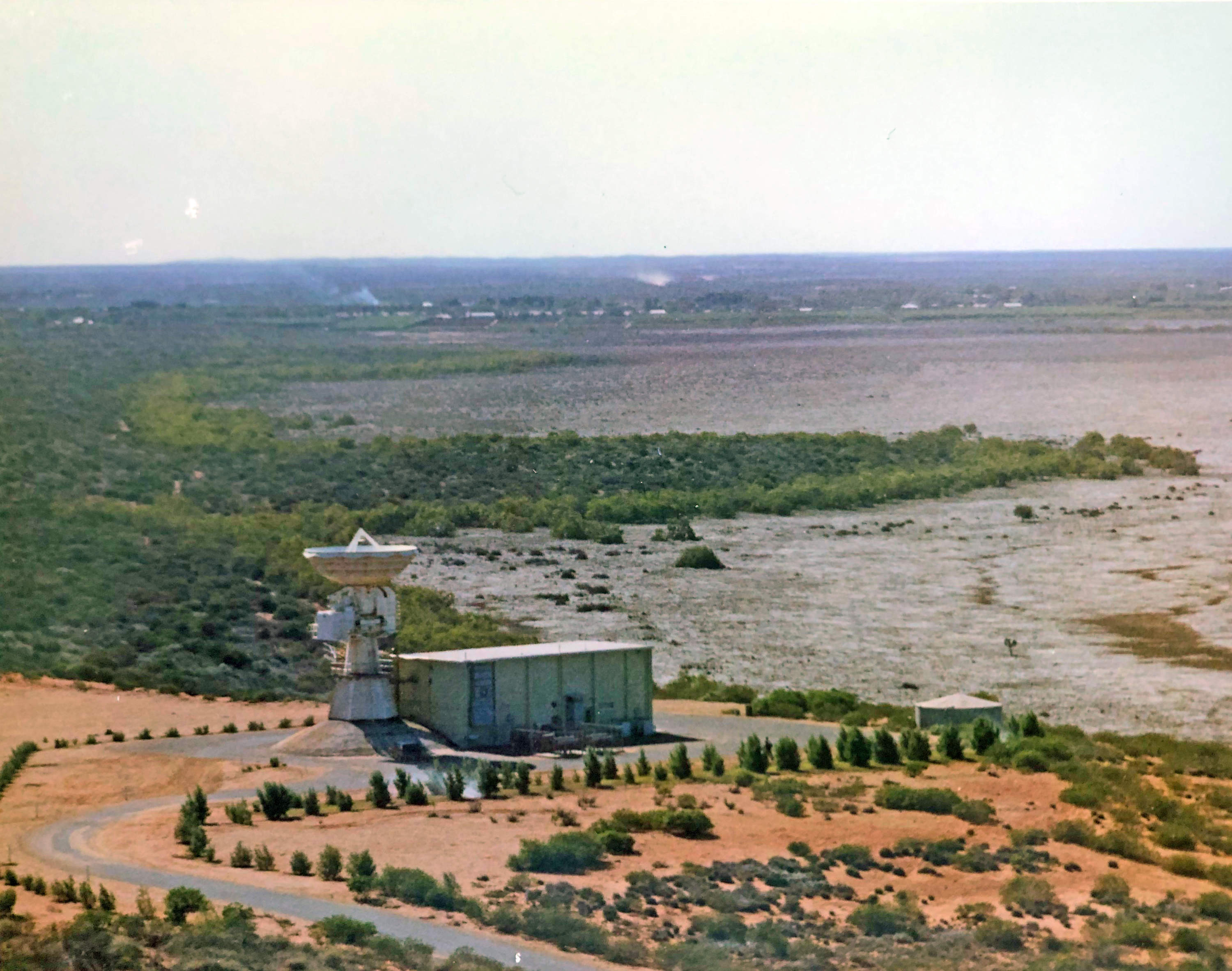 |
The FPQ6 with Tickle Belly Flats filled after recent rain. Photo from the album presented to Station Director Lewis Wainwright at his farewell in 1968. With thanks to Kevin Wainwright. Scan by Colin Mackellar. |
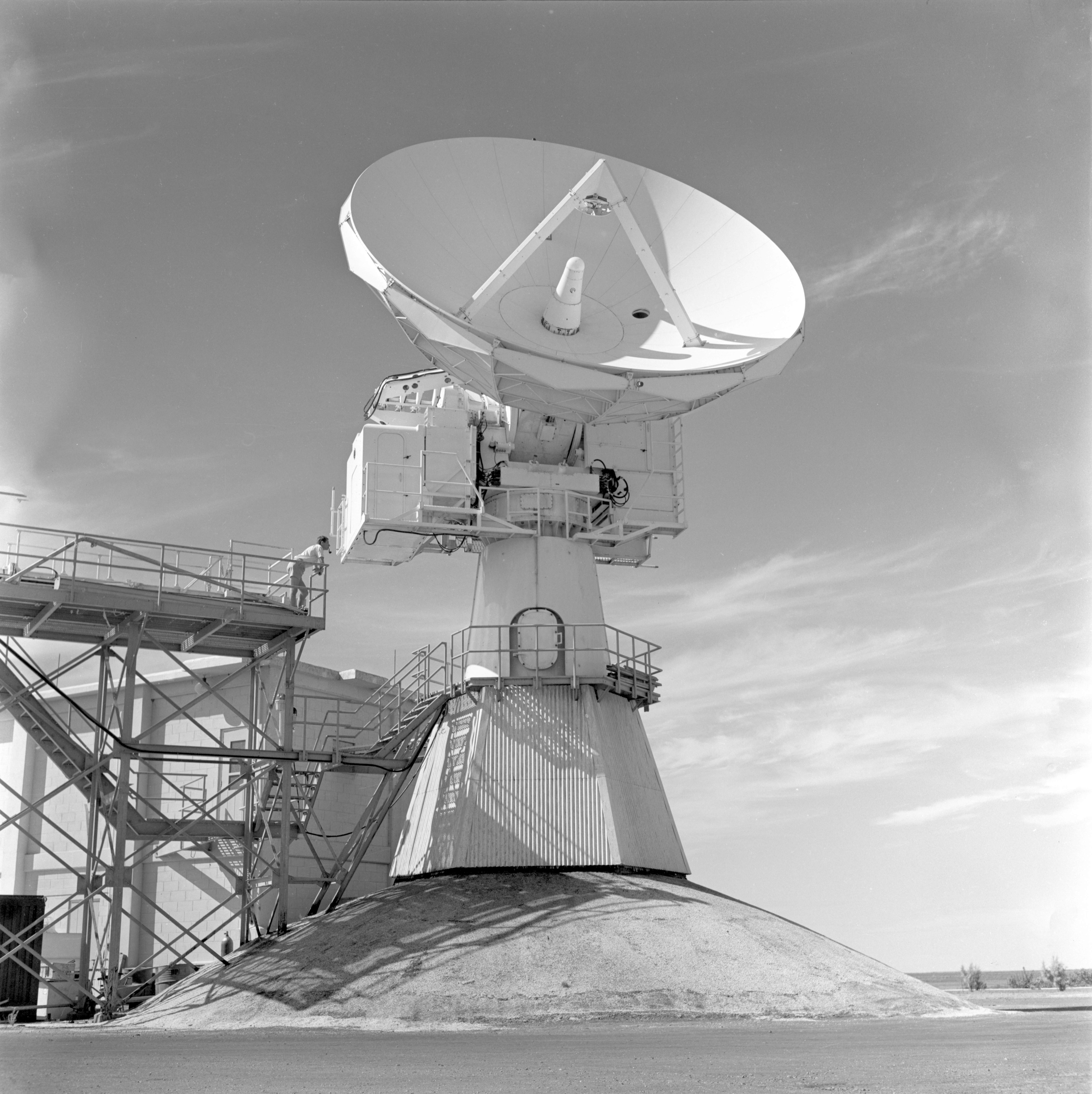 |
Don Blackman, smoking his pipe, overlooks the FPQ-6 radar. Photo: Hamish Lindsay. |
 |
Don Blackman, pipe in hand, and the FPQ-6 radar. Trevor Housley notes that in this later photo, hydraulic oil has had time to leak onto the pedestal and allowing the red dust to adhere. Photo: Hamish Lindsay. 2021 updated scan: Colin Mackellar. |
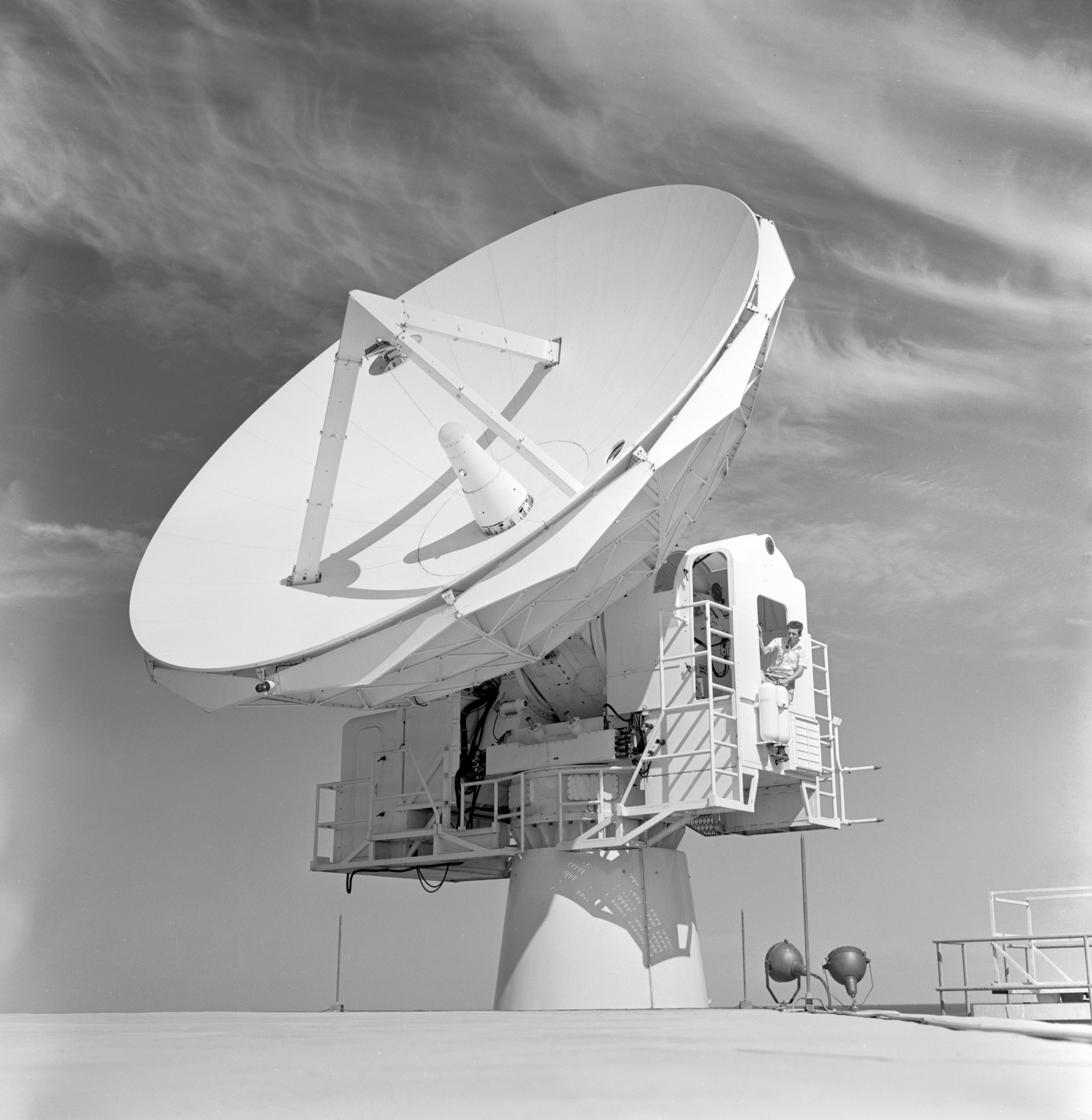 |
Don Blackman looks out from the Q-6 antenna mount cabin. Hamish Lindsay took this photo from the roof of the Q6 operations building. 2026 medium format negative scan: Colin Mackellar. |
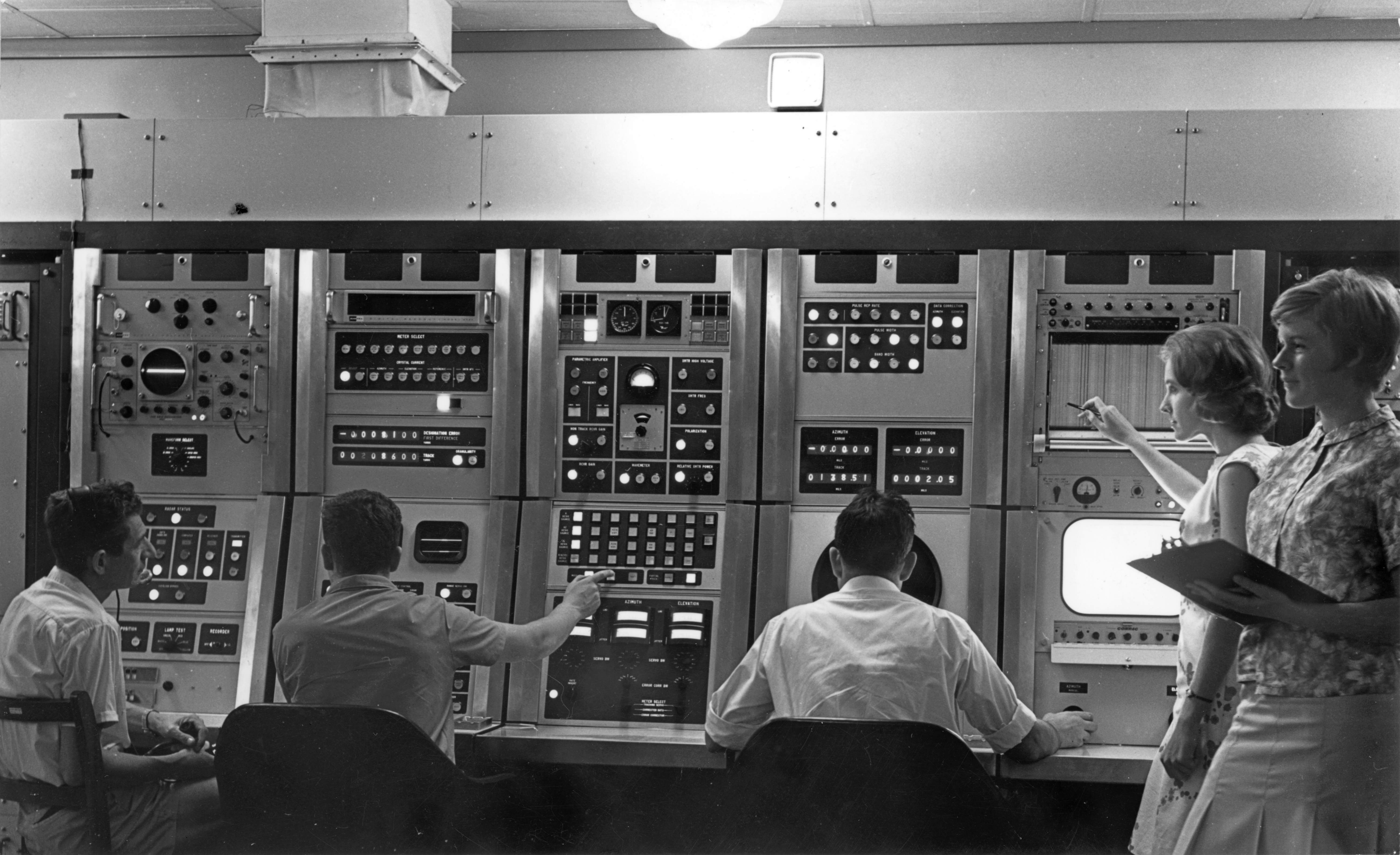 |
The FPQ6 console. From left: Don Blackman, George Allan, Ron Burgess (?), Diane Pitman and Nola Meikeljohn. Thanks to Trevor Housley for the names. |
Cooby Creek, Queensland
As NASA’s operations on Australia grew in 1966, Don and the family moved across the country to the Cooby Creek Applications Technology Satellite tracking station near Toowoomba.
 |
Cooby Creek Tracking Station, as seen from opposite the main gate. Scan by Nevil Eyre. |
At Cooby Creek, Don worked in the areas of the Antenna and in Test Equipment.
In this he supported the Applications Technology Satellite Program in developing satellite technology. The ATS Program involved placing a variety of satellites into geostationary orbit and using them for experiments including in communication (mobile comms, telephony, television) meteorology and navigation.
Lster years
Don’s involvement at Cooby Creek lasted until the primary mission of the station ended in 1969, and he moved again, to Brisbane. There he joined Watson Victor, a maker of scientific, medical and X-Ray equipment.
He continued this work with Watson Victor, servicing scientific equipment in mines and businesses across Tasmania after he and the family moved to Hobart in 1974.
Finally in 1979, Don, Peggy and Pauline moved to Perth (Tasmania), and then to Launceston in 1982. Don was now working with Hopwoods, servicing business and office equipment.
In his later years, Don enjoyed keeping in touch with his former colleagues from Muchea and Carnarvon and Cooby Creek, remembering the glory days of Mercury, Gemini, and the late-1960s’ vital advances in satellite technology. He died in Launceston in 2015 at the age of 94.
Don’s life and career took him from World War England to the first steps on the road to the Moon.
______
With much thanks to Don’s son, Robert Blackman, for all his help in compiling this page.