This
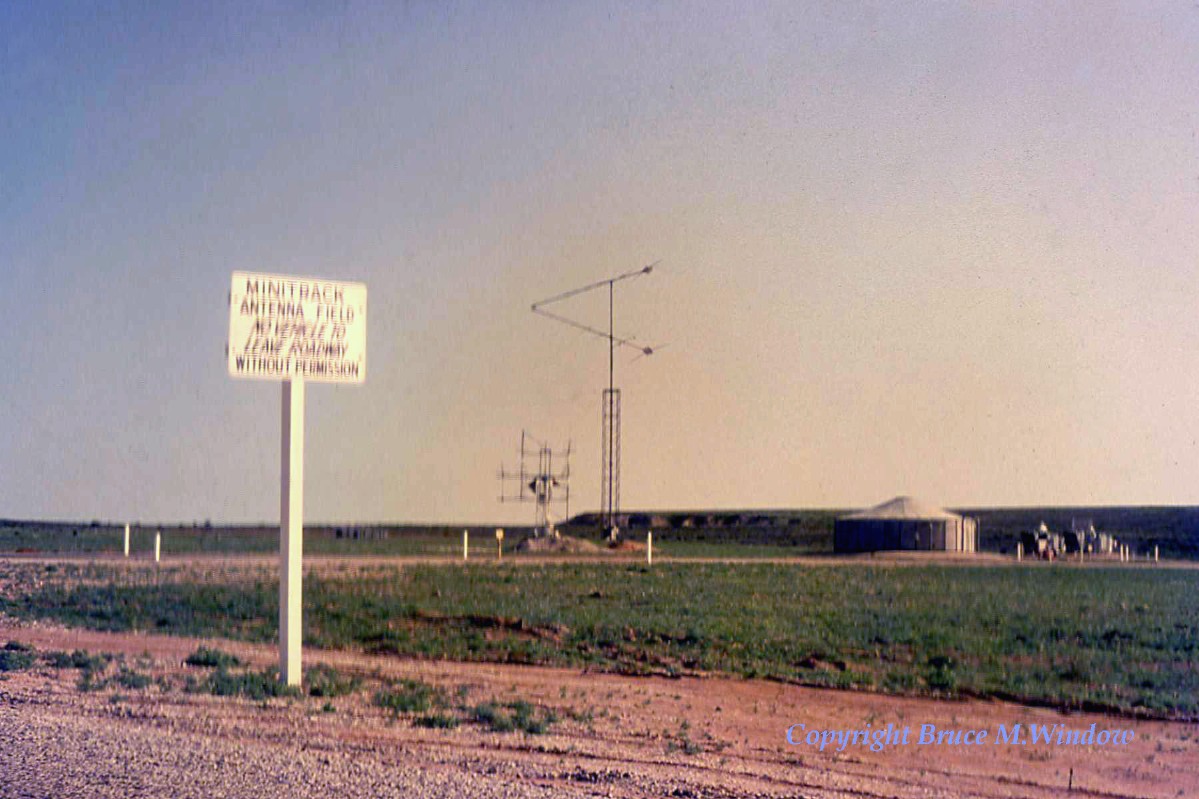
shows the roadway to the Ops building with warning sign “Minitrack
Antenna Field: No Vehicle to leave roadway without permission”,
Log Periodic Antenna for receiving time code sync signals from WWVH,
and also for listening to Russian Cosmonauts when in flight.
The ‘flying
saucer’ to the right is actually the water tank for the Ops building.
Here’s a higher resolution scan of the above photo – you can read the sign clearly.
This
photo looks North East and shows the Ops Building, and also the steerable
9 boom Yagi Telemetry receiving antenna, the calibration antenna for
the 9 Yagi, DSS41 ANT in background, DSS41 Col Tower on ridge, and pools
of water in foreground after a period of rain (most unusual that stuff).
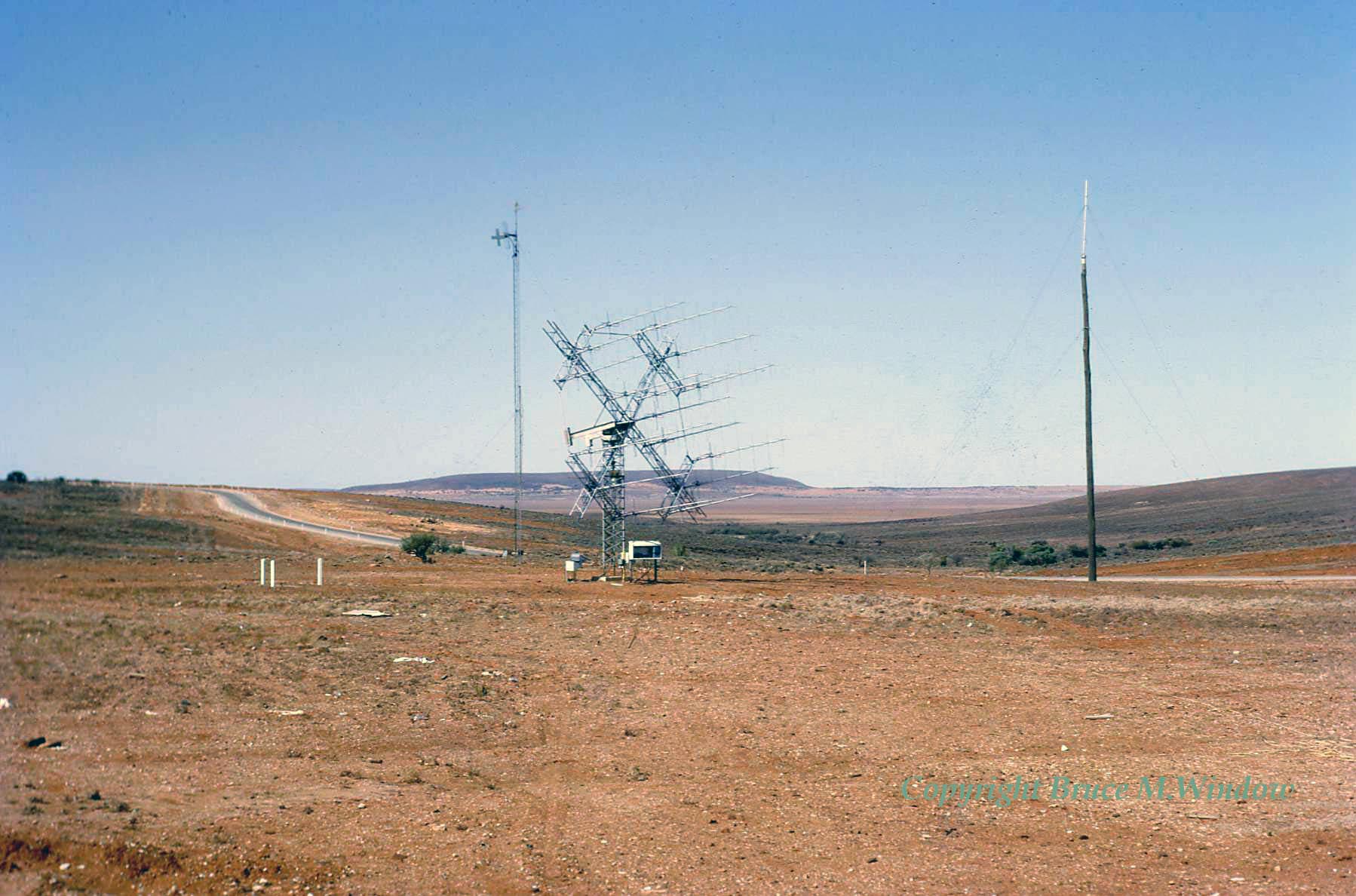
This
looks North West to Ops Building and shows the steerable 16Yagi Telemetry
receiving antenna, and Minitrack ANT (South Fine).
The
Minitrack 16-element Yagi at dawn.
This
photo looks South East from Ops Building and shows the steerable Telemetry
receiving antenna comprised of 16 booms of yagi antennas.
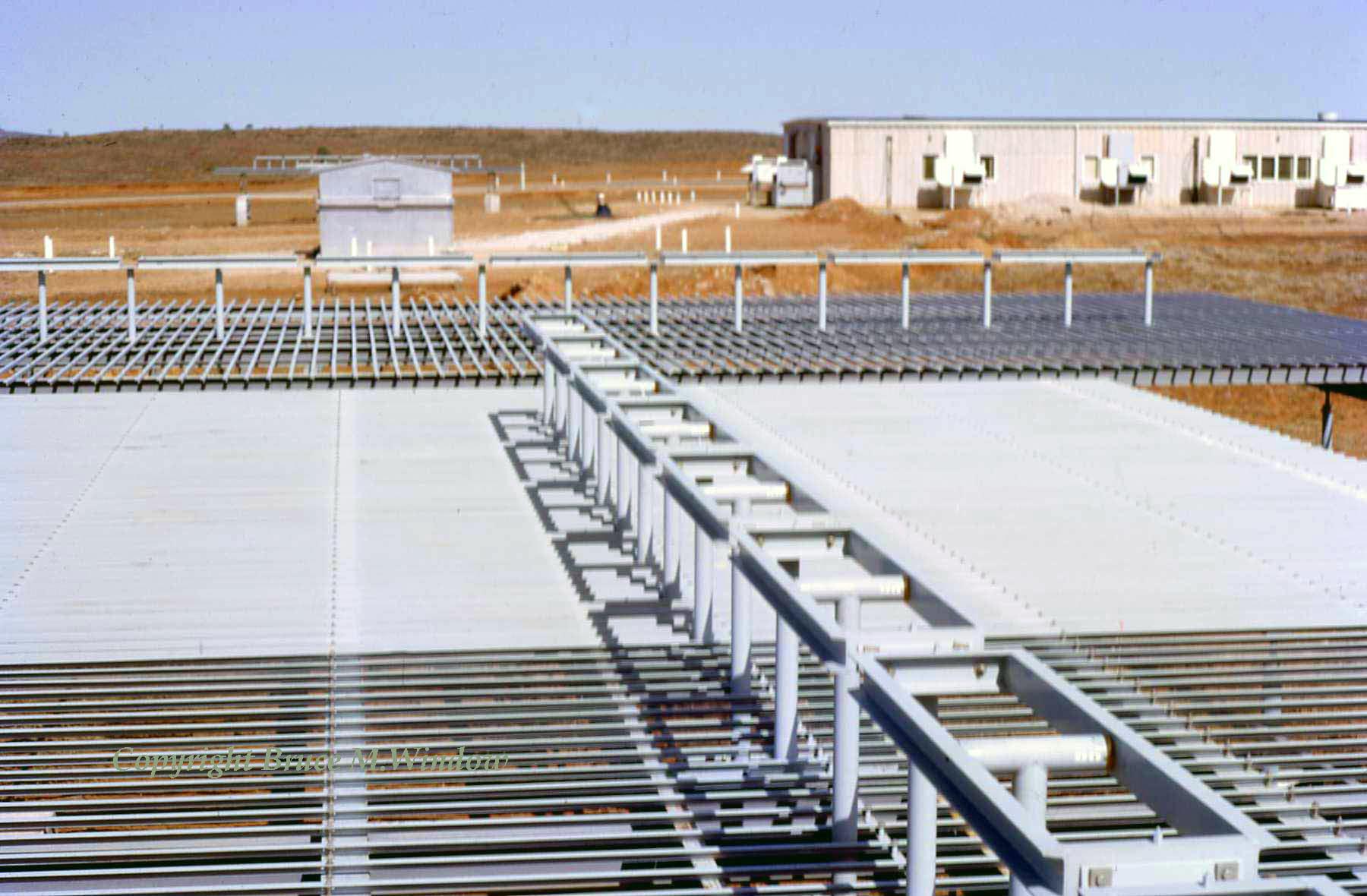
The
Minitrack stationary North-South antenna of coarse resolution.
The
Minitrack stationary antennas for determining when a satellite crossed
the latitude and longtitude coordinates of the antenna field.
These
are the North-South Fine resolution antennas.
The
steerable Command uplink Yagis (2 frequencies of uplink).
The
Baker-Nunn Camera building can be seen on the ridge in the distance.
Ed Mitchell at the Minitrack Telemetry console, 1963.
Photo: Bruce Window.
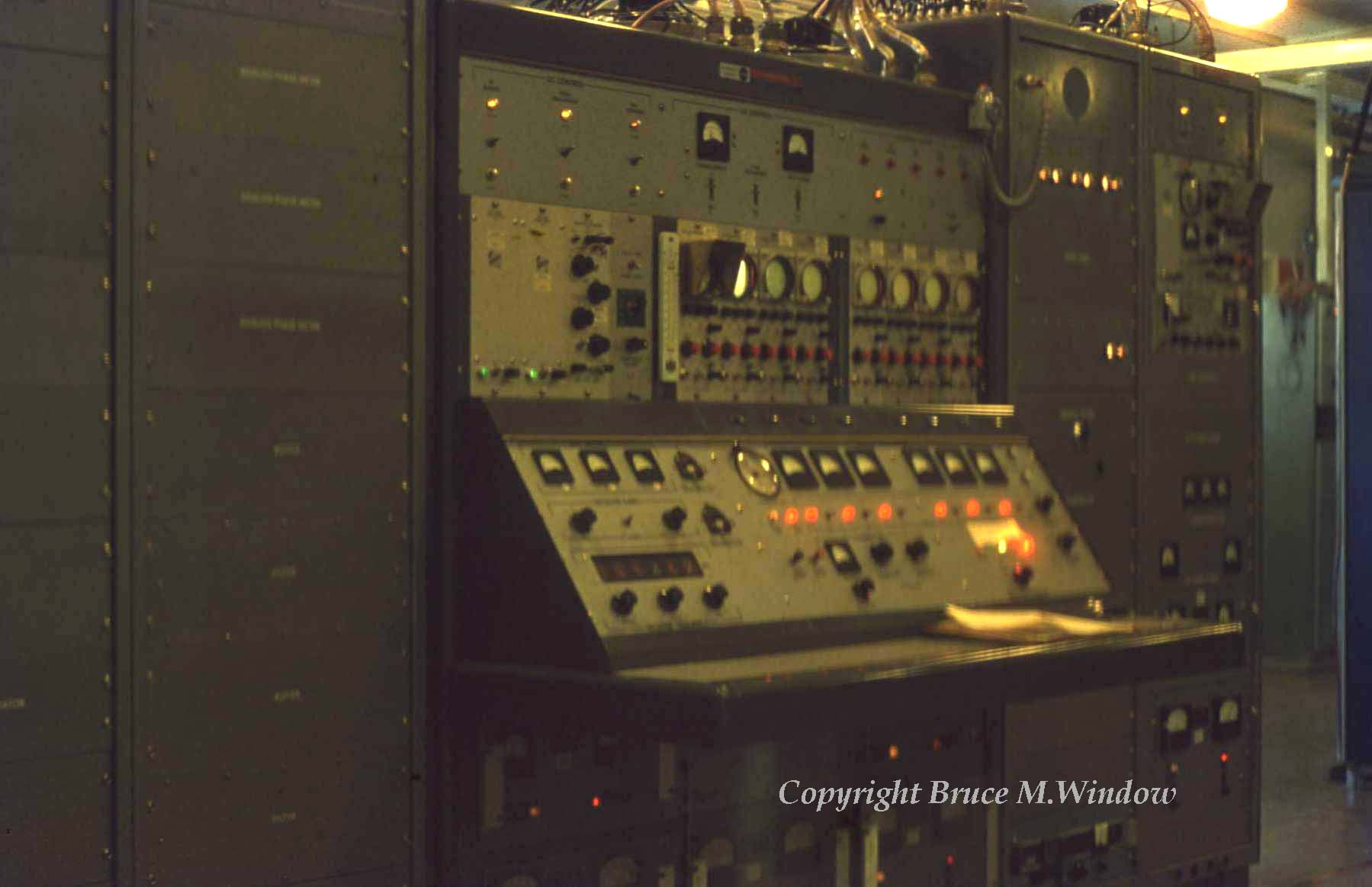
The
Minitrack console, looking towards the south west.
The
Minitrack console, looking towards the south east.
Bruce Window at the Island Lagoon Minitrack console, 1963.
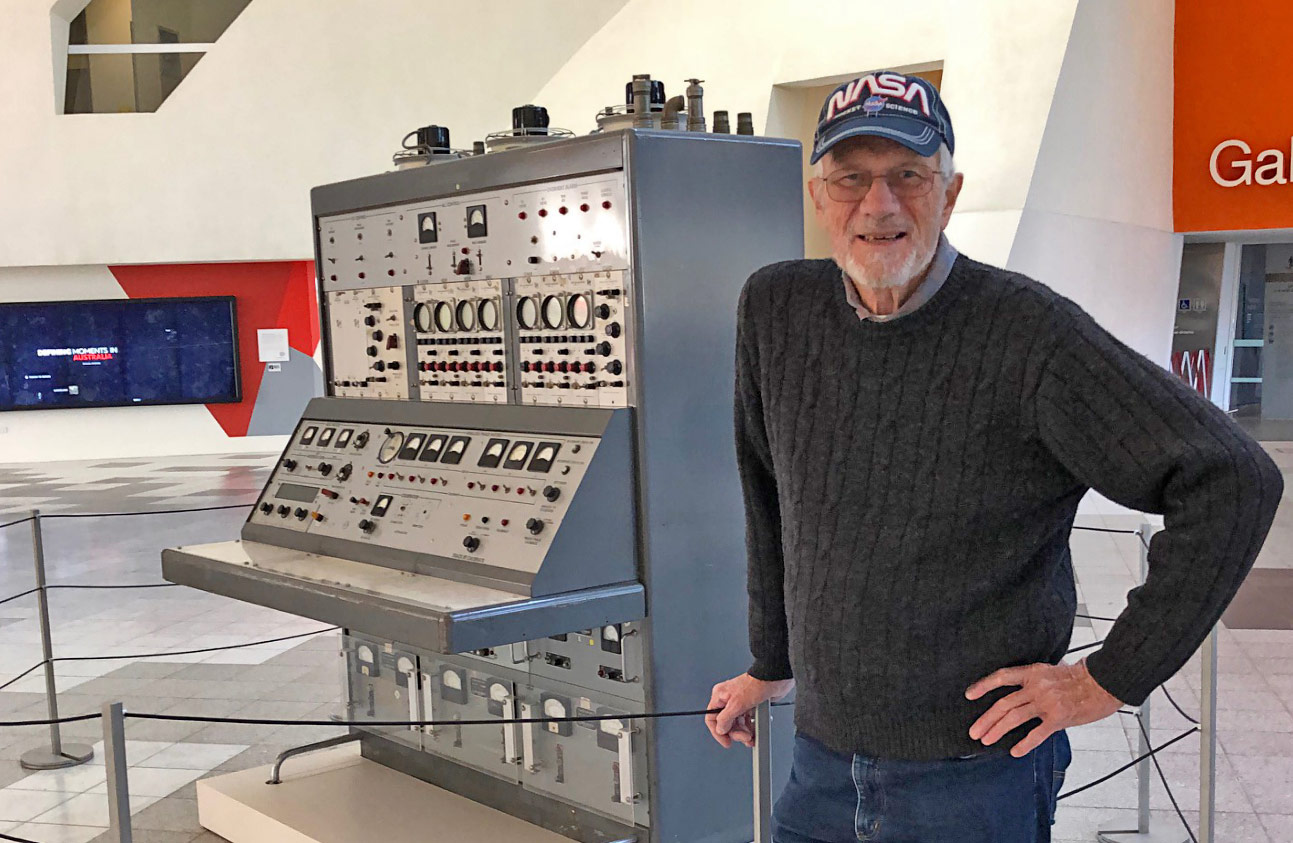
Bruce Window with his old friend, the Minitrack console (which was later moved to Orroral Valley) at the National Museum of Australia, July 2019.
A
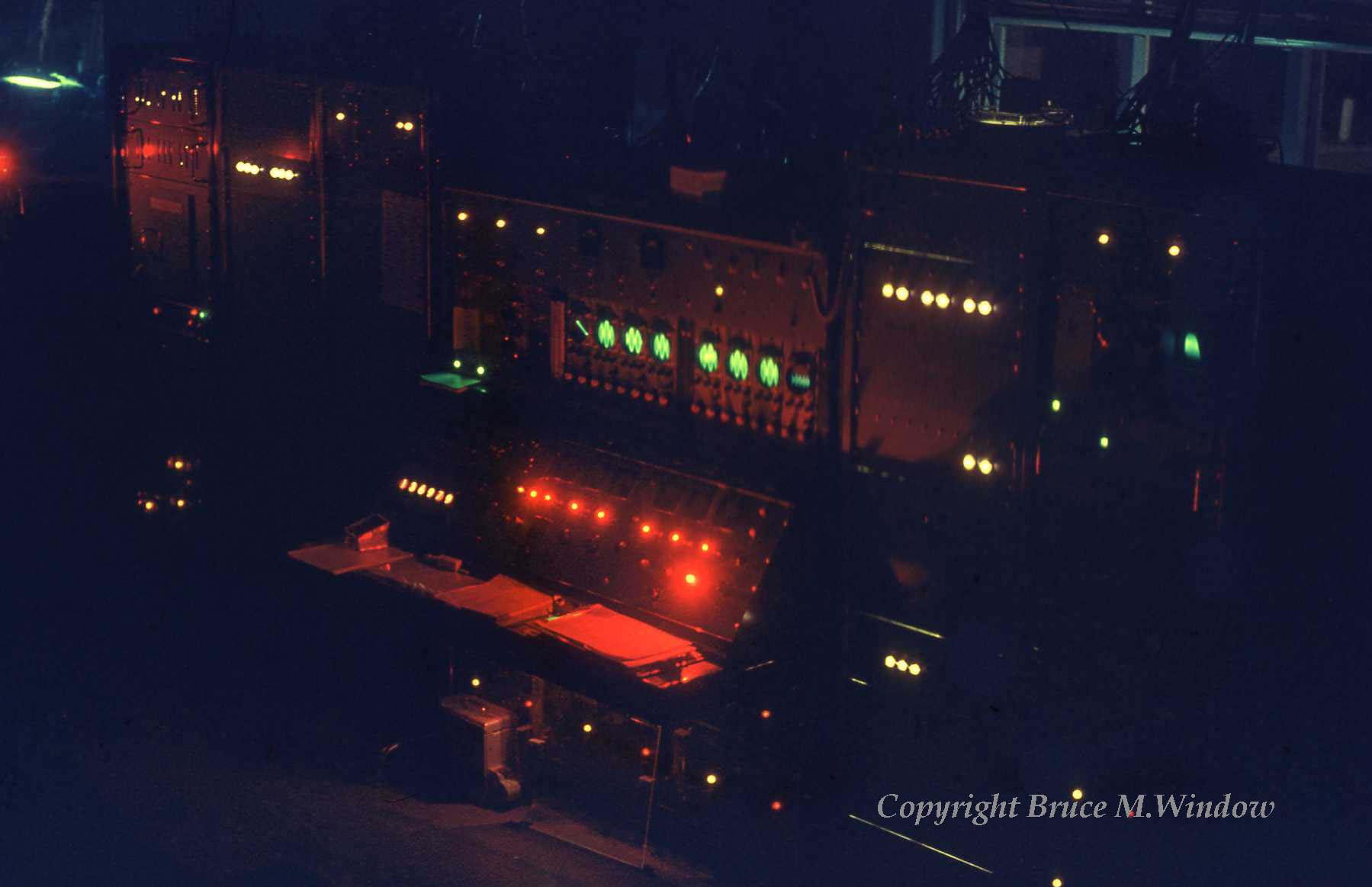
night-time shot of the Minitrack console.
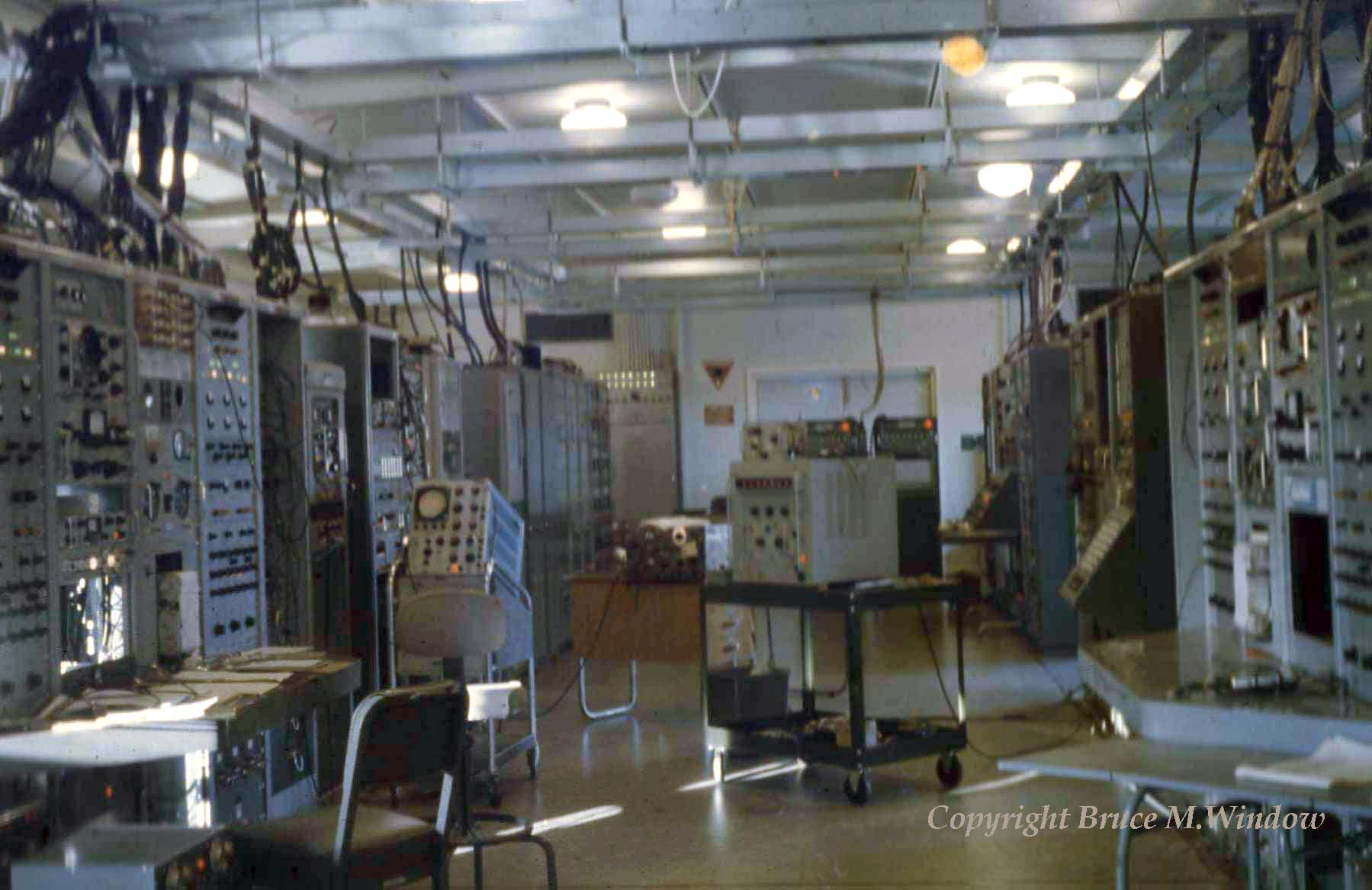
The
Minitrack Telemetry section in foreground with the Tracking section
at end of room.