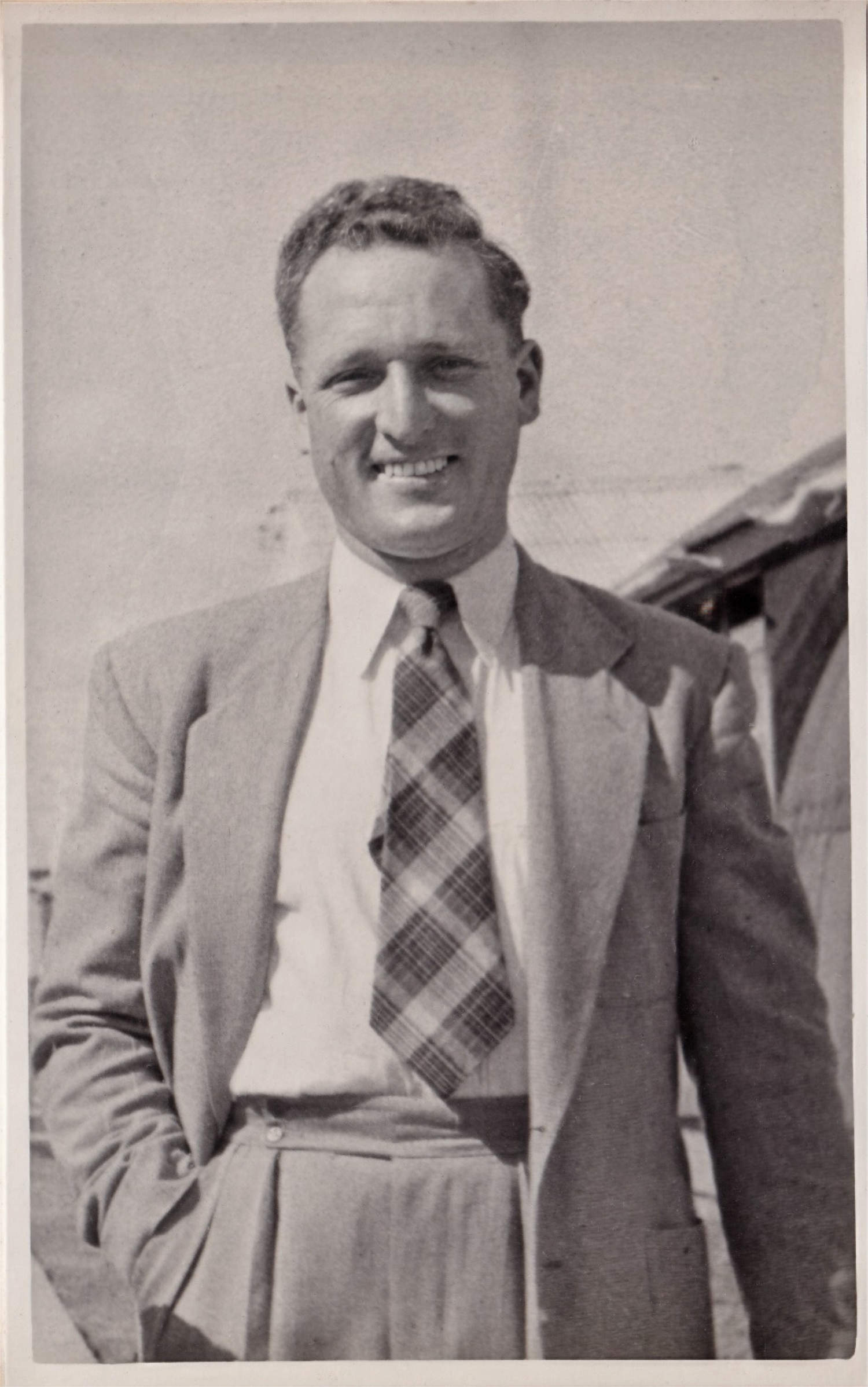
Fred Warren
1920 – 1980
Island Lagoon Baker-Nunn
|
Fred Warren, unknown date. |
Wilfred (Fred) Ernest Warren was born in Southall, Middlesex, about 17km west of Central London, in March 1920. He was the sixth of seven children born to Alfred and Lily Warren.
In 1934, at the age of 14, he obtained a job as an assistant Sheet-Metal worker at the Fairey Aviation Company in nearby Hayes. Next, followed ten years with the Great Western Railway, including 8 years as a locomotive fireman, and then several other local jobs.
In late 1947, he applied to emigrate to Australia. [1.] In September the next year, he sailed for Melbourne onboard the S.S. Ormonde [2.] which had been chartered by the Australian government.
It is believed that he first settled in Tasmania before moving to the mainland and joining the Royal Australian Air Force. [2.]
Fred’s further movements are not known until mid-1958.
As part of the International Geophysical Year (01 July 1957 – 31 December 1958), the Smithsonian Astrophysical Observatory had established a network of twelve optical tracking sites around the world – in Argentina, Australia, Curacao, India, Iran, Japan, Peru, South Africa, Spain, and at three locations in the United States, in Hawaii, New Mexico and Florida – using Baker-Nunn cameras. [3.]
These specialised optical tracking cameras were designed to help refine the orbit of US satellites which were planned for launch during the IGY. The Baker-Nunn cameras would photograph a satellite as it passed in front of the star field and, combined with accurate timing, would allow the satellite’s position to be determined with a high degree of precision.
Listed as a Technical Officer grade 2 in documents preserved by John Heath, Fred became the long-running Director of the Woomera Baker-Nunn camera.
The Australian Baker-Nunn camera was initially installed at Woomera’s Range G, and Fred Warren began there in August 1958. A few months earlier, the first Woomera Minitrack station, also on Range G, had begun operations.
 |
The Woomera Baker-Nunn Camera, at its first location on Range G – from Ivan Southall’s 1962 book “Woomera”. |
 |
This extract from the inside spread of Goddard News, Volume 4, Number 5, February 11 1963 includes Fred’s photo, along with other Directors of the SAO network. This copy with thanks to the Goddard Space Flight Center Library. |
 |
Fred sent this clipping from The Review of Popular Astronomy magazine, No 527, April-May 1964, to his brother in England. It shows something of the sensitivity of the Baker-Nunn. Thanks to Jonathan Warren for this copy. |
In mid 1964, the Baker-Nunn camera was moved to a new building at the Island Lagoon Tracking Station, south of Woomera.
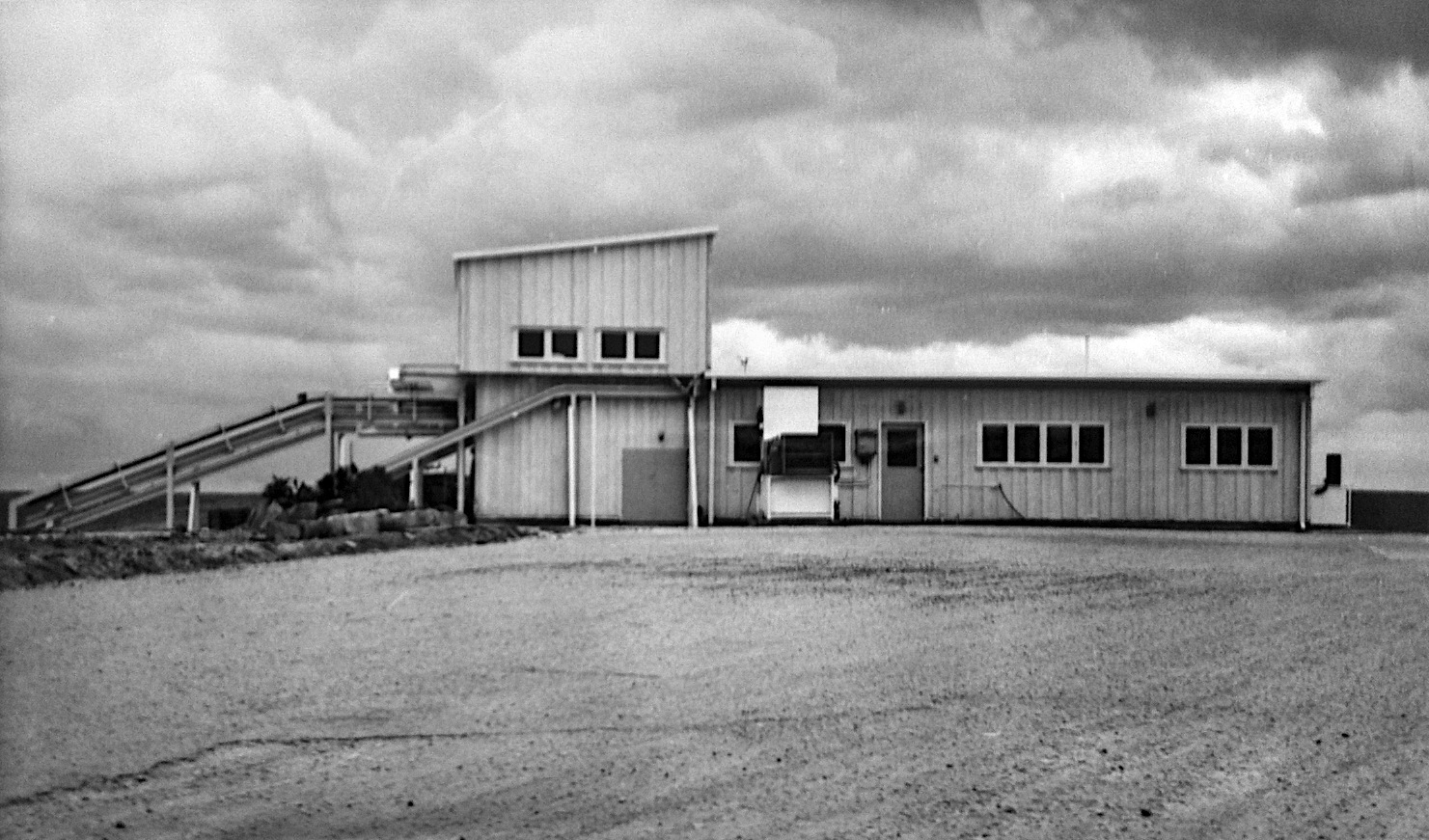 |
Baker-Nunn Camera House, Island Lagoon. The upper ‘storey’ is a protective cover for the Camera. For operations, it was rolled down the track at left to move it out of the line of sight. Photo from the Tidbinbilla Archives. Scan: Colin Mackellar. |
 |
The Island Lagoon Baker-Nunn site is at left in this aerial view by Bill Schoene taken from about 6,000 feet (1,800m). Here’s the unlabelled original. |
Fred continued as Director of the camera until he left Island Lagoon in March 1970. [4.]
What he did after that is not known, though it appears he moved to the Canberra suburb of Hackett. He died in late 1980 and was buried at the Gungahlin Cemetery. [5.]
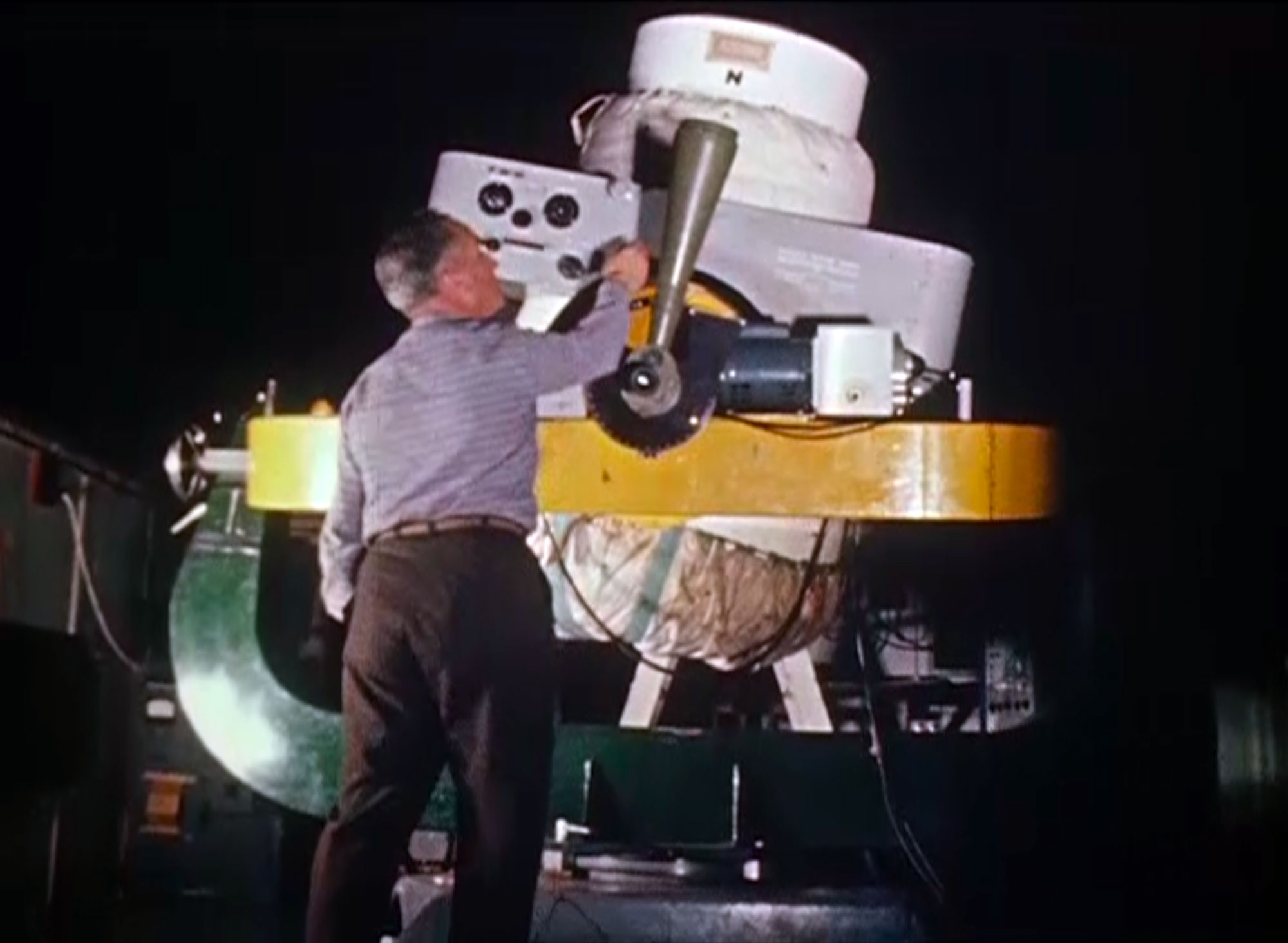 |
Fred Warren operating the Baker-Nunn Camera at Island Lagoon – a frame from the 1965 Department of Supply film “Partners in Space”. Thanks to Dave Squires for the identification of Fred Warren. |
References:
1. Application for Assisted Passage to Australia, National Archives of Austrlia.
2. E-mails from Fred’s great nephew Jonathan Warren, May 2026.
3. SAO leaflet.
4. Island Lagoon staffing documents preserved by John Heath.
5. The Canberra Times, page 18, 02 December 1980.