DSS-42 Upgrade and Extension to 34 metres


DSS-42 at Tidbinbilla

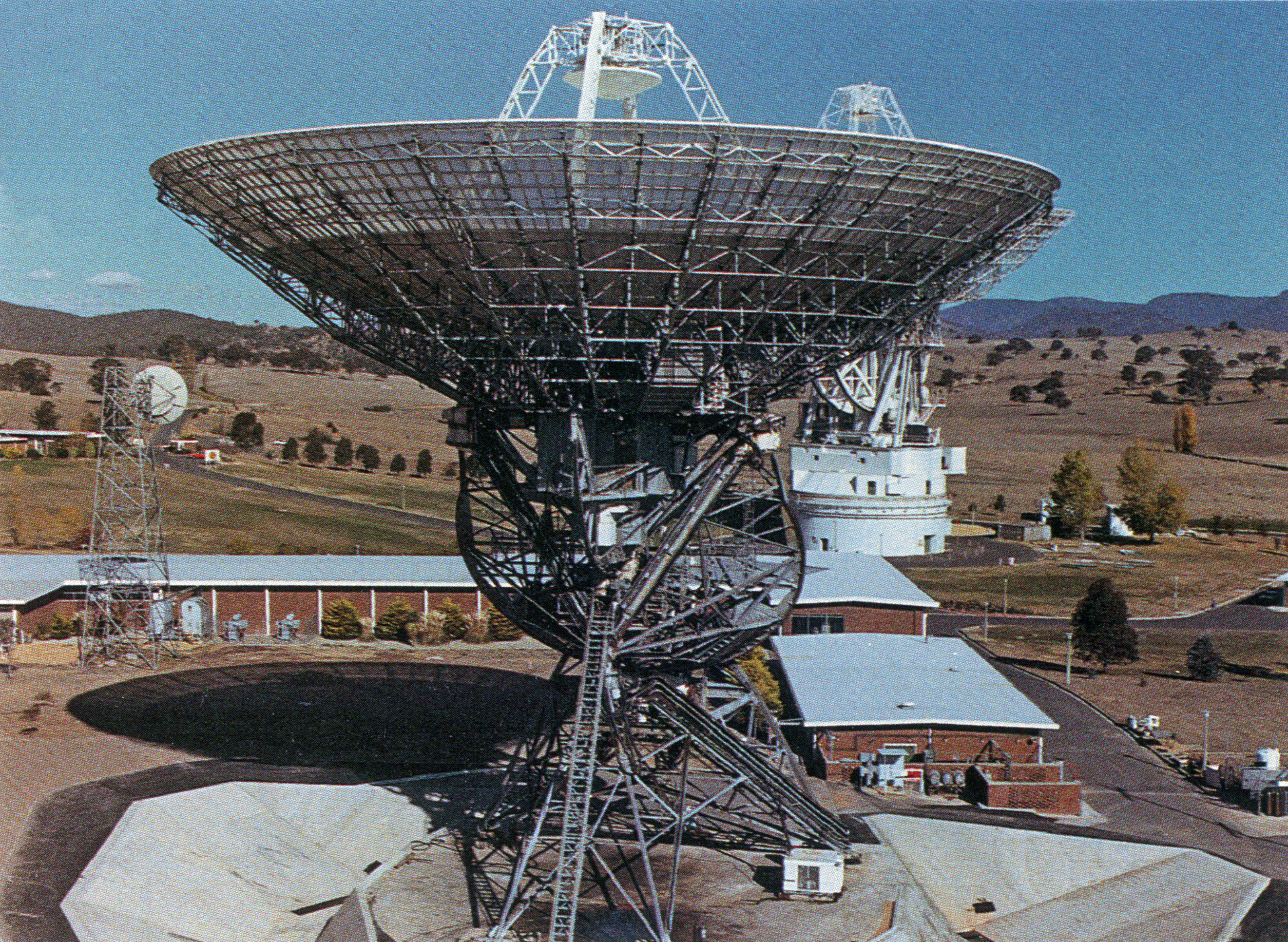
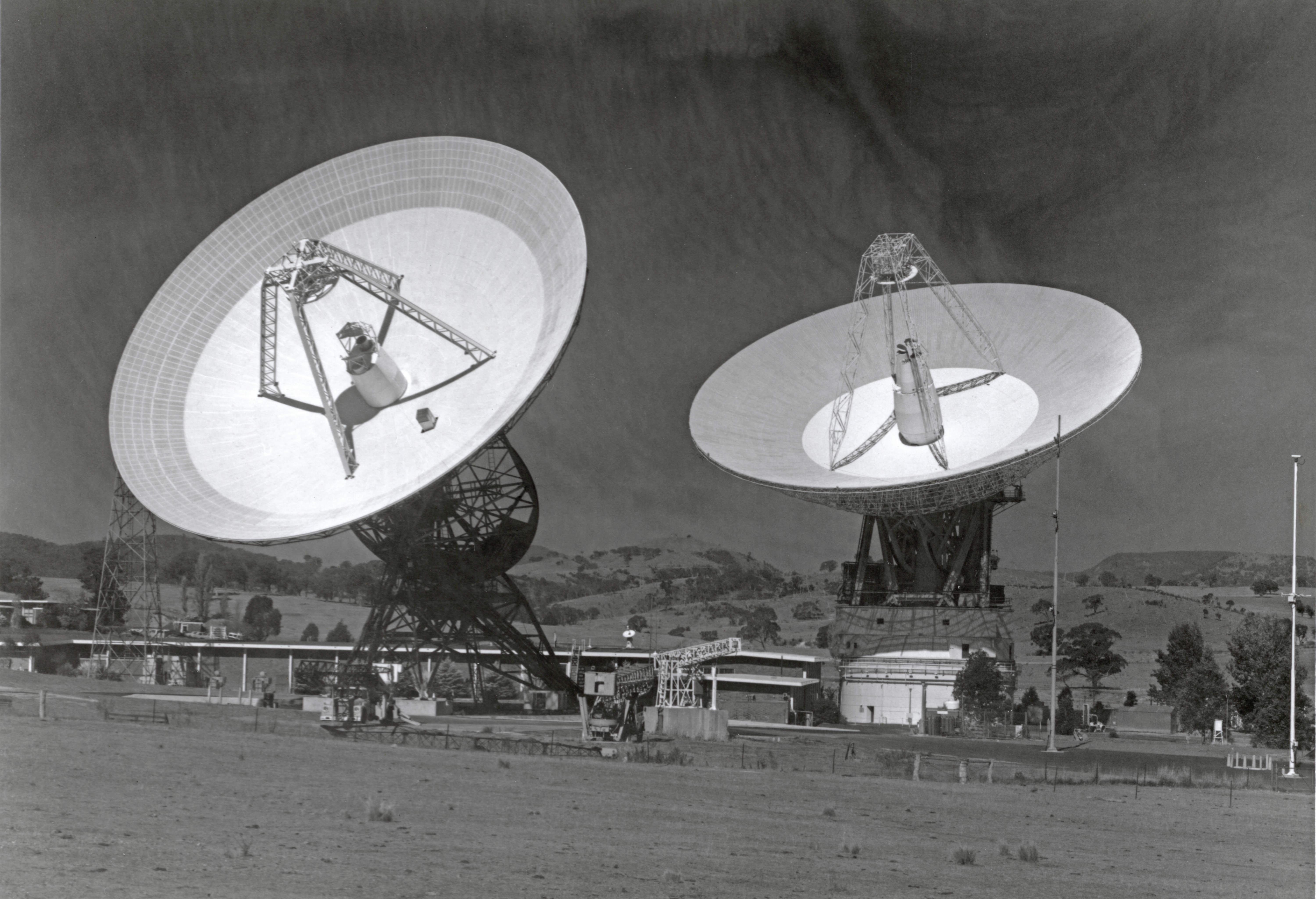
DSS-42, in its new 34-metre configuration, with the (then) 64-metre DSS-43 behind, and the Operations and Engineering building between them.

Note the two concrete-lined trenches on either side of DSS-42, to allow the extended antenna to tip fully to the East and West horizons.

1980s photo thanks to Nevil Eyre.


JPL’s Nick Renzetti explains the rationale for extending Tidbinbilla’s original antenna from 26 to 34 metres. The work took place in the late 1970s.

“After the landing of the Viking spacecraft on Mars in 1976, the principal thrust of solar system exploration shifted to missions to the outer planets; i.e., Jupiter, Saturn, Uranus, and Neptune. It thus became important to modify the Deep Space Network to reflect the new mission set.

The first step in this process was to convert a subnet of 26-meter antennas to 34 meters. This new diameter was chosen as a practical engineering limit that could use most of the existing structure of the 26-meter antennas.

The choice was made to convert the Spain and Australia 26-meter antennas that were collocated with 64-meter antennas, and the newer of the two
26-meter antennas at the Goldstone Echo site.

… the Robledo antenna [was] raised on four new 3-meter (10-foot) concrete pillars. The reason for raising the antenna was to allow it to clear the ground when the extended reflector was tilted at the horizon; this was also the case at Goldstone. A new quadripod was constructed to support the new reflector and its positioner. …

Unlike the antennas at Goldstone and Robledo, [DSS-42, the Tidbinbilla] antenna was left in its original position; however, two trenches 3.7-meters (12 feet) deep were constructed in order to allow the extended reflector to clear when it was positioned at horizon.

The conversions were completed in 1979.”

– from Picture Album of the Deep Space Network, internal JPL publication compiled by N A Renzetti and D Worthington, JPL, July 1, 1994.


DSS-42 at Tidbinbilla

The upgrade is about to begin in earnest, with the quadripod and feedcone being removed.

CSIRO photo with thanks to John Sarkissian.


DSS-42 at Tidbinbilla

The feedcone and quadripod have been removed, woth just one leg of the quadripod being lifted away.

CSIRO photo with thanks to John Sarkissian.


DSS-42 at Tidbinbilla

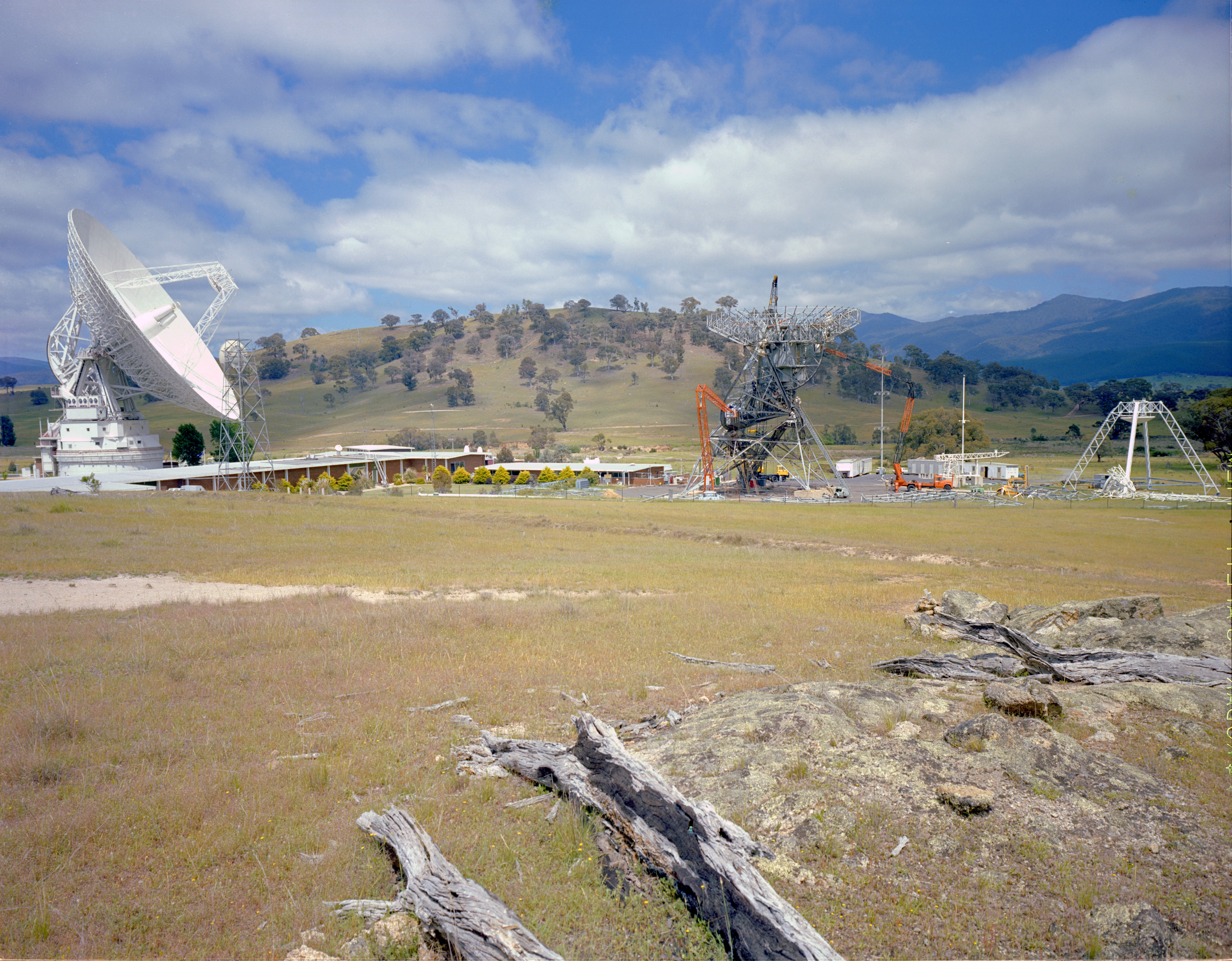
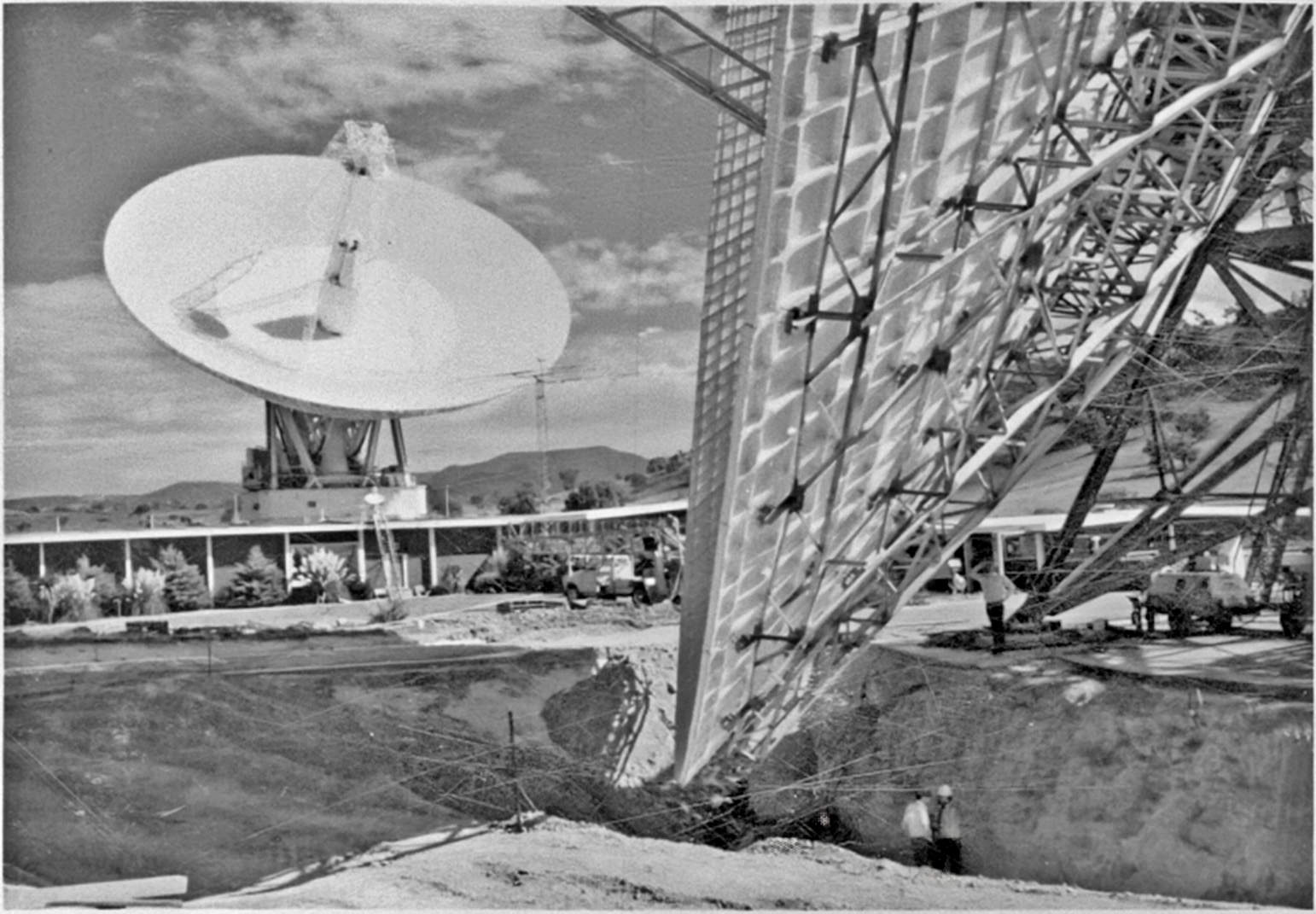
Looking towards Larry’s Hill, the 64 metre DSS-43 stands at left, while DSS-42, at centre-right, is undergoing its transformation from 26 to 34 metres.

The new quadripod and sub-reflector are at right. The original subreflector and (apparently) the remains of the old quadripod lie on the ground below.

Photo by Hamish Lindsay. 4x5 inch negative scan by Colin Mackellar.


DSS-42 at Tidbinbilla

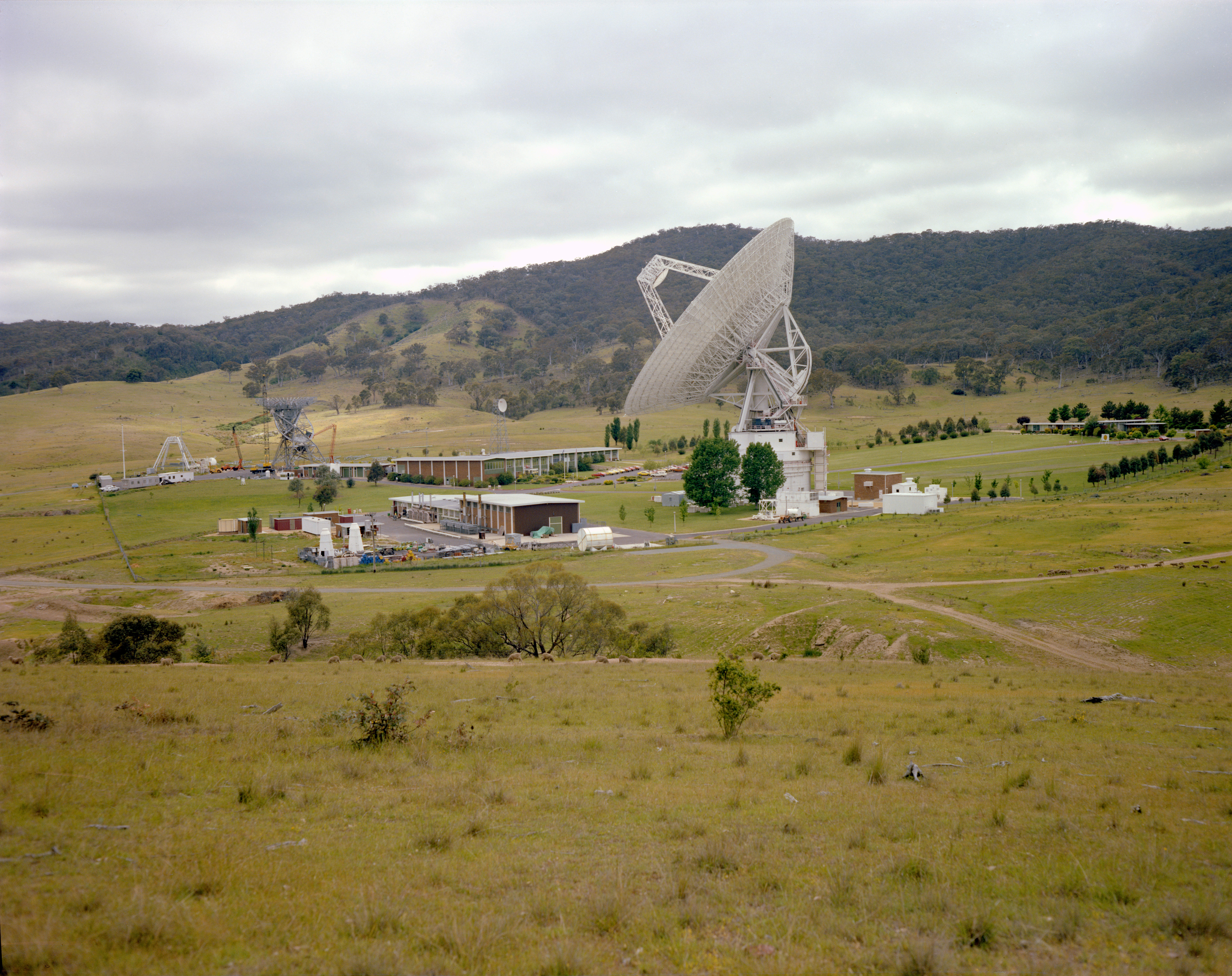
Hamish took this photo from the opposite side, low on Larry’s Hill.

The Powerhouse is in the foreground, with the Operations and Engineering building behind. The Canteen and Visitors Centre and security hut are on the right. Sheep graze outside the perimeter fence at right.

Photo by Hamish Lindsay. 4x5 inch negative scan by Colin Mackellar.


DSS-42 at Tidbinbilla

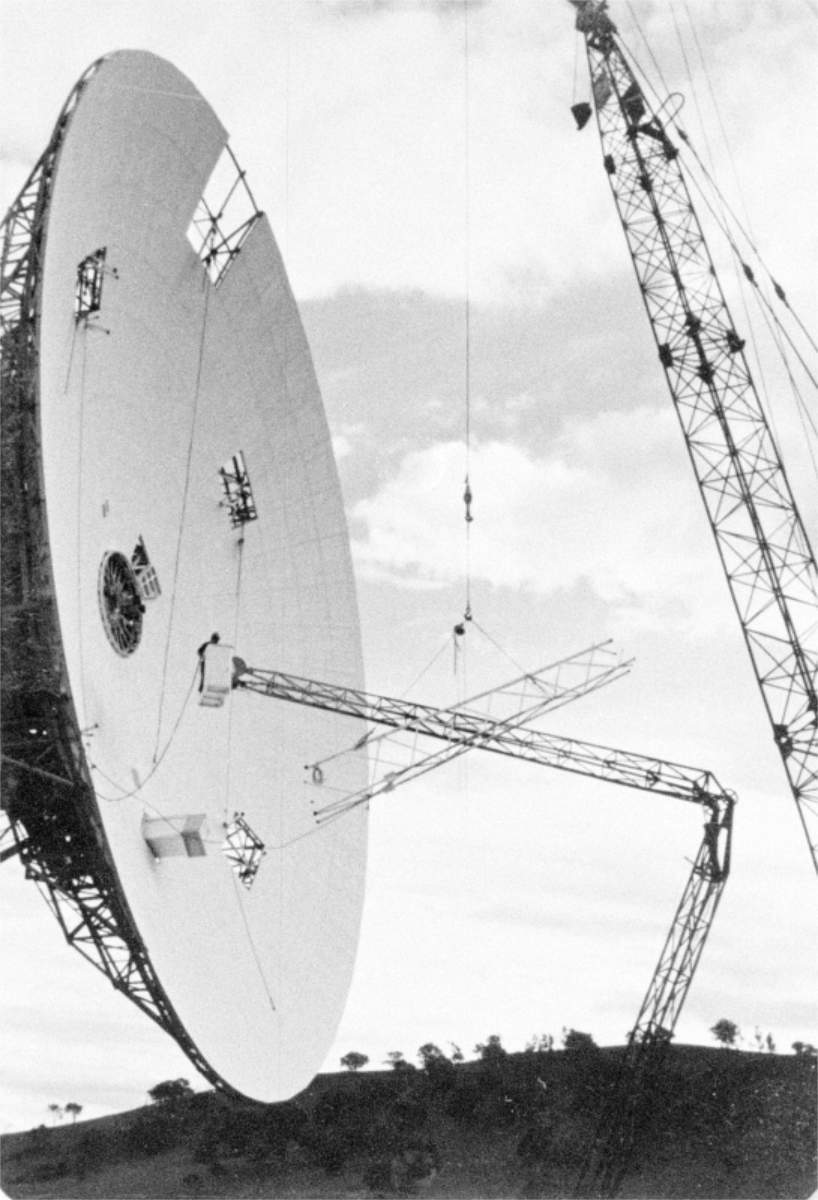
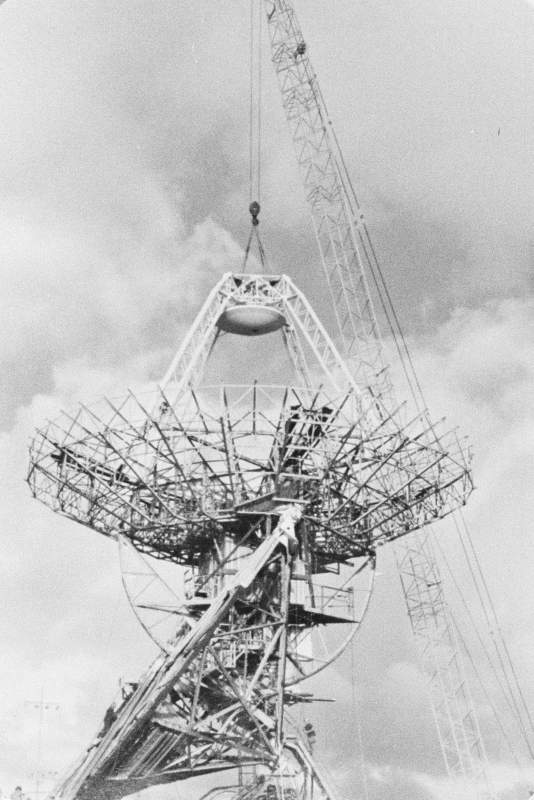
With the primary reflector surface and structure removed, the new quadripod is lifted into position.

CSIRO photo with thanks to John Sarkissian.


DSS-42 at Tidbinbilla

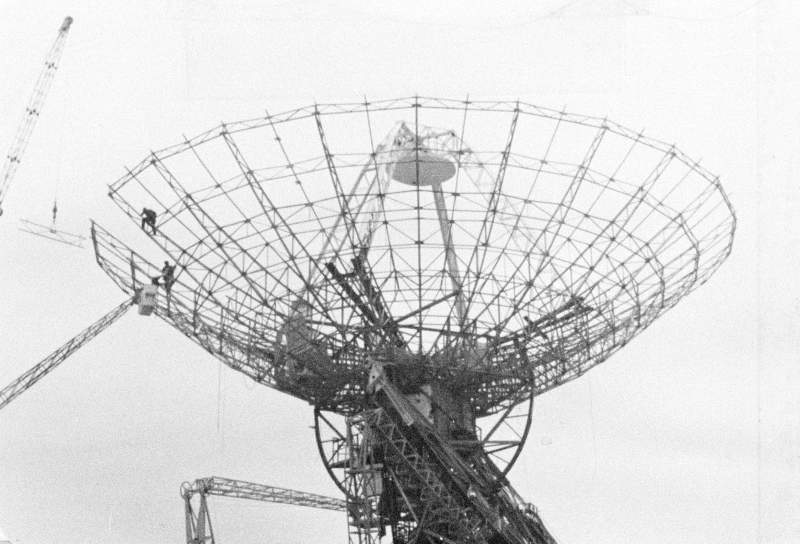
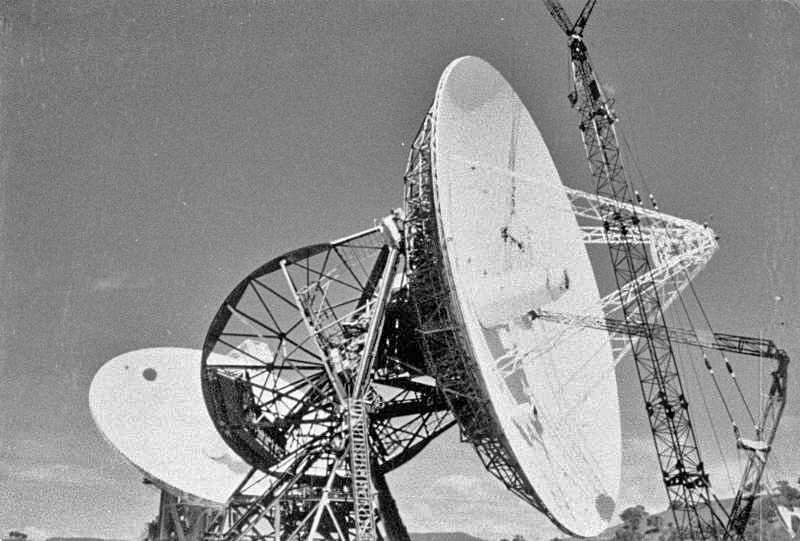
The extended primary reflector support structure is almost complete.

CSIRO photo with thanks to John Sarkissian.


DSS-42 at Tidbinbilla

At bottom right, two workmen can be seen in the trench as the newly extended antenna tips over to check clearance.

DSS-43 is in the distance at left.

CSIRO photo with thanks to John Sarkissian.


DSS-46 at Tidbinbilla

When the former Honeysuckle Creek antenna – now designated DSS-46 – was moved to Tidbinbilla in early 1982, it was mounted on concrete blocks to allow a possible extension from 26 to 34 metres, though such upgrade was never carried out.

May 2008 photo by Colin Mackellar.


DSS-42 at Tidbinbilla


Transformation almost complete, the dish supports and reflector surface, along with the new quadripod and sub-refector and feed cone are now in place.

A worker is rolling the newly-laid concrete surround to the 3.7-metre-deep trenches at the east and west sides of the antenna.

Hamish Lindsay took this photo from the roof of the Operations and Engineering Building, looking roughly NNE.

Photo by Hamish Lindsay.
4x5 inch negative scan by Colin Mackellar.


DSS-42 at Tidbinbilla

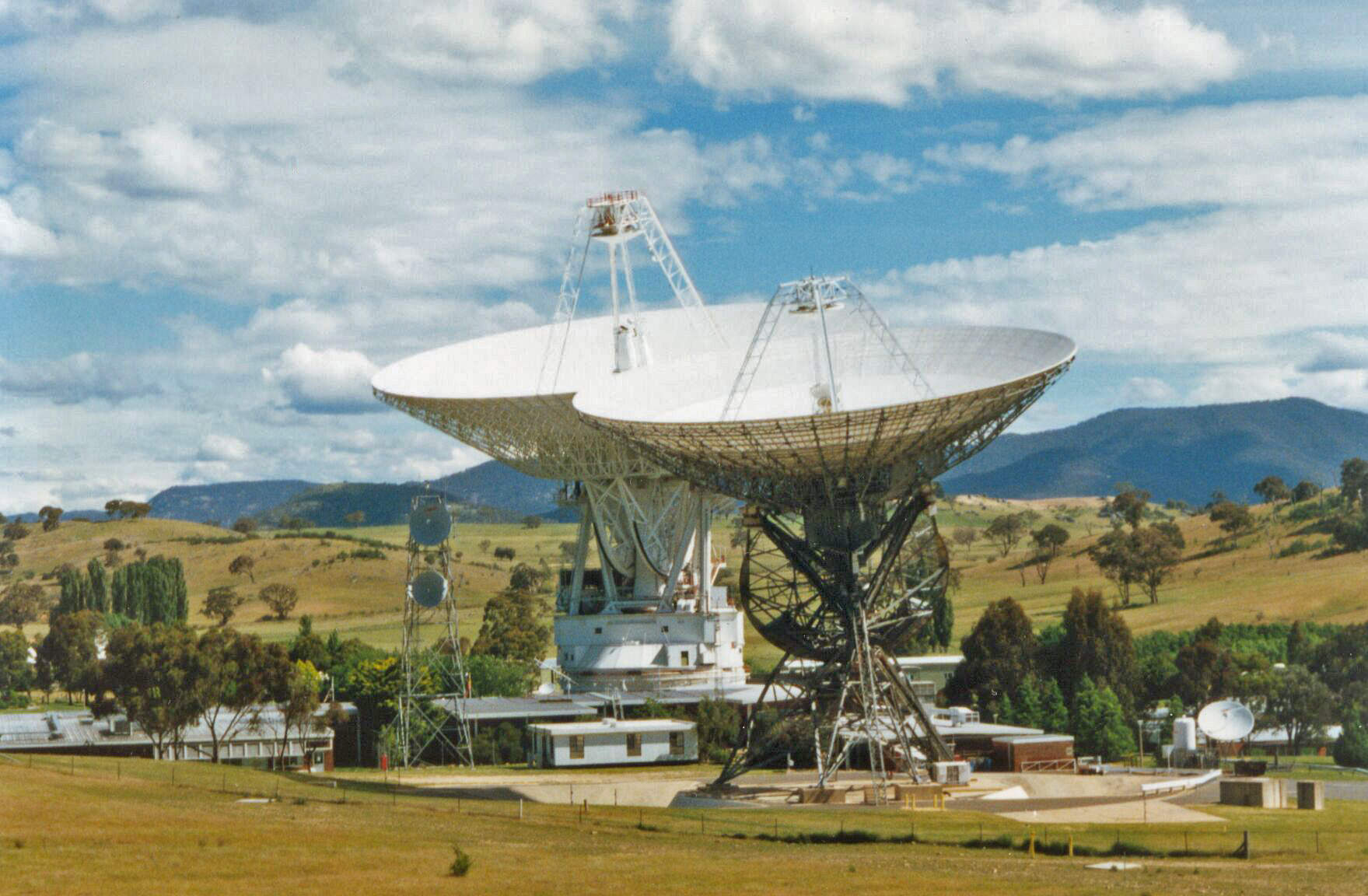
DSS-42, in its new 34-metre configuration.

Note the two trenches to allow the antenna to tip towards the horizon.

Photo from Picture Album of the Deep Space Network, internal JPL publication compiled by N A Renzetti and D Worthington, JPL, July 1, 1994. Courtesy Mike Dinn. Scan by Colin Mackellar.


Tidbinbilla gallery

DSS42, after its extension to 34 metres at left, with DSS43 in its original 64 metre configuration (it was extended to 70 metres in 1987).

Undated, but early 1980s, photo by Hamish Lindsay.
Scan of 5x7" print: Colin Mackellar.


As well as increased sensitivity, the upgraded dish now had the capability of receiving at X-band (~8.45 GHz), for communicating with the most distant solar system probes.

DSS42 lived far past its design life, and was in use until 2000, when metal fatigue forced its retirement from service.
(A page on DSS42’s decommissioning is coming.)